

Introduction :
Every Signature Home begins long before lines take shape on paper. The real magic lies in understanding the land, reading its behaviour, and listening intently to the people who will live there. The biggest problem most homeowners face is that their dream home looks perfect in renderings but doesn’t feel right once built. Sunlight enters aggressively, rooms feel disconnected, or circulation becomes awkward. These frustrations grow because important decisions were made without detailed groundwork. When expectations break, homeowners feel stuck with a beautiful home that doesn’t support their lifestyle. The solution is always the same: comprehensive site visits and a well-shaped client brief. Firms like Simran Boparai know that thoughtful preparation builds intuitive, comfortable, and emotionally warm homes that stand the test of time.
What Makes a Signature Home Truly Special
A home becomes signature not because it is expensive but because it is personal, meaningful, and crafted with intention. The identity of a Signature Home comes from the harmony between environment, lifestyle, and design. Architects consider how families interact with spaces, how they relax, how they host, and how they seek privacy. Each zone is shaped with spatial planning that respects movement, comfort, and purpose. When the planning feels effortless, the home becomes a reflection of the family rather than a collection of rooms. The alignment of architecture design, textures, natural light, and emotional cues is what creates a home that feels curated and timeless.
Why Detailed Site Visits Matter More Than Drawings
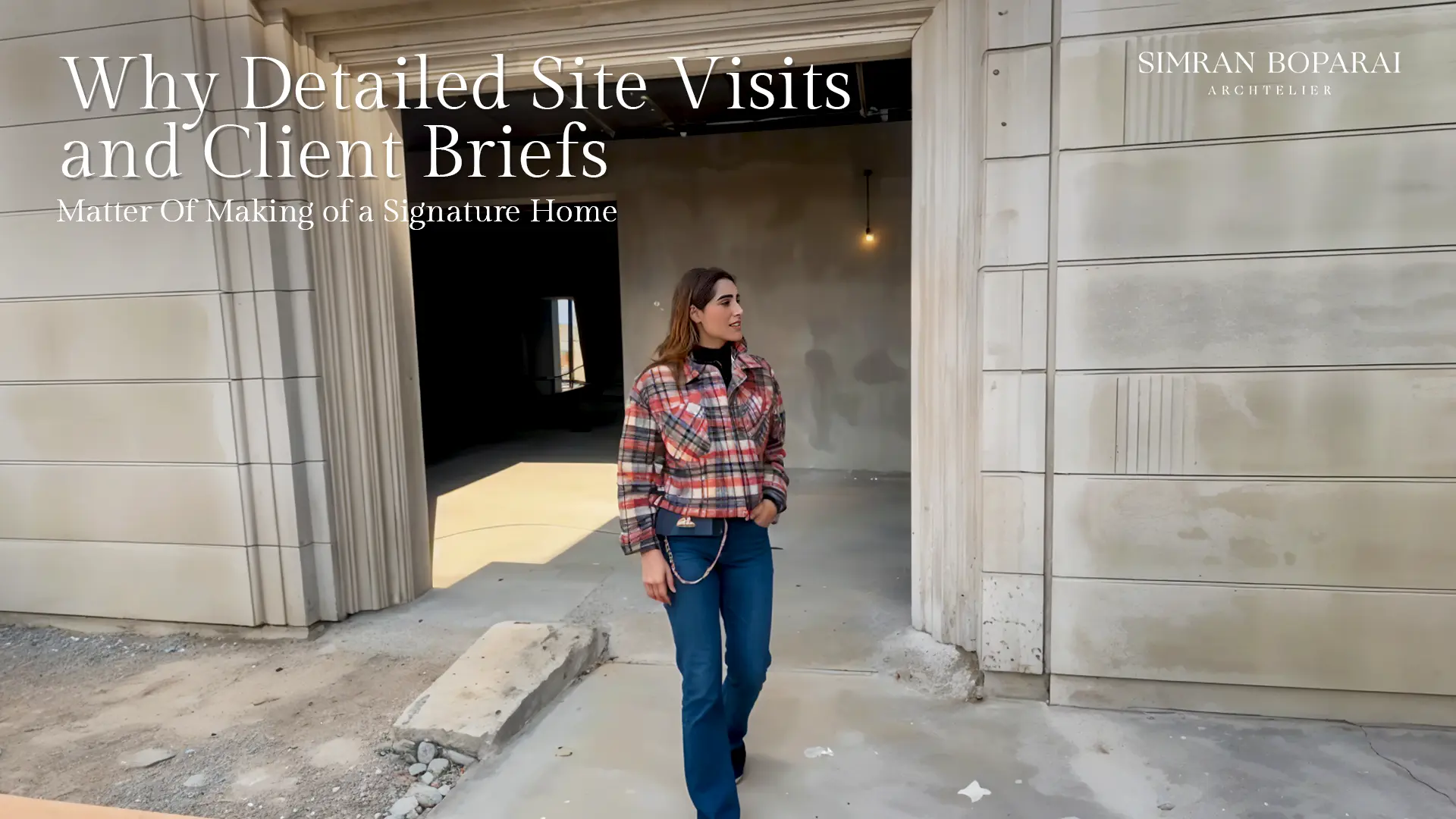
A site visit is not just a formality—it is the backbone of every design decision. When architects walk the land, they understand the topography, soil strength, wind movement, and microclimatic conditions that no drawing can reveal. Observing the sun path helps decide façade orientation, opening sizes, and shading needs. Tracking wind direction guides natural ventilation strategy, allowing the home to breathe through passive cooling instead of relying heavily on artificial systems. Even the smallest details—from where shadows fall to how birds move around the plot—become clues that shape design. A good site visit uncovers hidden strengths, such as potential courtyard spots, natural privacy pockets, or views that can be framed with precision.
Understanding Surroundings and External Influences
A home is never isolated; it interacts with everything around it. The surrounding buildings, street width, vegetation, noise sources, and skyline all influence design choices. If neighboring homes are tall, the architect must plan for daylighting through skylights or internal courtyards. If the area has traffic movement, the placement of bedrooms, balconies, and landscape buffers becomes crucial for noise control. In greener locations, architects take advantage of natural views and fresh air by aligning openings strategically. The goal is not only to make the home look beautiful but to make it environmentally responsive and comfortable throughout the day. When surroundings are understood deeply, the home becomes part of a larger ecosystem instead of resisting it.
The Power of a Clear and Detailed Client Brief
The client brief acts as the guiding light for every decision in the project. Many families know what they want but struggle to express it clearly. A detailed brief records lifestyle habits, morning routines, preferred materials, future family plans, entertaining styles, and comfort expectations. It also captures emotional tones, like wanting a calming bedroom, a warm living area, or a vibrant social zone. These cues help architects craft spaces that feel intuitive and nurturing. The brief guides zoning so that private and public spaces don’t clash, allows thoughtful circulation flow, and ensures each room supports real life rather than assumptions. A well-written brief prevents redesigns and keeps the design aligned from the first sketch to the final finish.
Translating Emotions Into Architectural Expression
Architecture becomes deeply meaningful when it carries emotional intention. A home should not only serve practical functions but also uplift the mind, soothe the heart, and inspire daily living. Clients often share how they want their home to feel—serene, airy, bold, cozy, or elegant. Architects convert these emotions into spatial qualities using material textures, color palettes, ceiling heights, and light behaviour. For example, a peaceful morning corner may be aligned with soft eastern light, while an expressive double-height space may become the dramatic entry of the house. Emotional translation is what turns a simple room into a memorable experience, and this depth emerges only when both site and client are understood.
How Strong Communication Strengthens the Design Process
Clear communication between clients and architects prevents misunderstandings and eliminates guesswork. When discussions are open, honest, and detailed, the design evolves with clarity and confidence. Sharing references, inspiration images, dislikes, budget expectations, and long-term vision helps shape a home that aligns perfectly with reality. Early conversations also highlight hidden needs such as storage planning, movement requirements for elders, or future room conversions. Consistent communication ensures the home ages gracefully rather than becoming restrictive over time. It is not just about approval—it is about collaboration that saves time, reduces errors, and enhances the quality of the final creation.
Why Pre-Design Research Creates Long-Lasting Comfort
Research before design plays a transformative role in building a Signature Home. Architects analyze local regulations, environmental conditions, structural possibilities, and material availability. Understanding what is feasible helps avoid costly modifications later. Research also supports sustainable decisions like energy-efficient design, water management, and heat-resistant façades. Choosing locally available materials ensures longevity and reduces maintenance. This groundwork ensures the home not only looks beautiful on day one but remains efficient, stable, and comfortable for decades. Without this research, even the most beautiful architectural vision can fail under real-world conditions.
Transforming Site Limitations Into Design Opportunities
Every site has challenges—awkward shape, uneven slope, privacy concerns, or harsh sunlight. But strong architectural thinking converts these challenges into unique design features. A sloping site can inspire split-level interiors that feel dynamic and connected. A narrow plot might lead to a long linear home with ventilation pockets and glass bridges. Harsh sunlight can be filtered using pergolas, breezeways, or screen walls that add character. These creative solutions often become the most memorable elements of the home. Studios like Simran Boparai thrive on transforming limitations into strengths, making each project uniquely expressive and structurally intelligent.
Why Modern Homeowners Demand Precision
Today’s homeowners expect more than aesthetics—they seek comfort, sustainability, practicality, and personality. Precision in circulation design, lighting distribution, and space optimization has become essential. People prefer homes that allow natural airflow, maintain indoor temperature efficiently, offer organized storage, and support daily routines effortlessly. Modern preferences also include sustainable architecture, low-maintenance materials, and smart orientation for reduced energy consumption. A Signature Home aligns with these aspirations, offering a blend of modern comfort and timeless design integrity that supports well-being.
Improving Functionality Through Detailed Site Study
Functionality improves significantly when the site is studied deeply. Understanding wind movement, shade patterns, and light intensity helps optimize window placement, room positioning, and ventilation flow. Homes designed using passive ventilation strategies stay cooler, reduce energy use, and feel more breathable. Skylights, clerestory windows, and shaded openings ensure even daylighting without overheating. Functional improvements like these directly impact comfort, mood, and long-term usability. Instead of relying on artificial systems, the home works with nature—saving energy, supporting wellness, and enhancing everyday living.
How Client Briefs Influence Aesthetic Consistency
Aesthetic consistency begins with understanding what the client naturally gravitates toward. The brief guides the creation of material palettes, color schemes, and interior moods that reflect personality. Whether the client prefers earthy tones, minimal elegance, bold textures, or warm wood finishes, the brief ensures these choices remain consistent across the home. This coherence eliminates visual chaos and creates a calm, inviting architectural language. Through the brief, architects decide whether the home should lean towards contemporary interiors, traditional warmth, or timeless modernism. Strong aesthetic clarity elevates the home from ordinary to iconic.
The Journey From Concept to a Signature Home
Creating a Signature Home is a layered journey. It starts with site visits, continues with detailed discussions, and evolves through sketches, concept boards, design development, and final execution. At each stage, the architect balances creativity with feasibility, ensuring the home stays aligned with vision and practicality. Structural integrity, interior layout, landscape connections, lighting design, and façade composition all work together like pieces of a puzzle. The final result is a home that feels customised, harmonious, and emotionally rooted. A signature home is never rushed—it is crafted with patience, precision, and a deep understanding of how people live.
Conclusion
A Signature Home is the result of meaningful groundwork—careful site evaluation, attentive listening, emotional understanding, and technical excellence. Detailed site visits allow architects to design with environmental intelligence, while structured client briefs allow them to design with personal sensitivity. When these foundations come together, the home becomes a sanctuary that reflects identity, supports lifestyle, and stands resilient through time. The path from land to home is intricate, but when approached thoughtfully, the final result is a living experience that feels intentional, beautiful, and uniquely yours.
FAQs
- Why are site visits essential before home design begins?
They help architects understand climate, orientation, and environmental behaviour, ensuring the home responds naturally and efficiently to its surroundings. - What should a good client brief include?
Lifestyle habits, emotional preferences, future plans, and functional needs help architects create spaces that feel personal and intuitive. - How does research before design improve results?
Research prevents structural issues, ensures sustainability, reduces redesigns, and enhances comfort across seasons. - What makes a home feel “signature” instead of generic?
Personalization, contextual design, emotional depth, and thoughtful details give a home its unique identity. - Do surroundings truly influence home planning?
Yes, factors like noise, views, wind, sunlight, and neighbourhood density directly shape placement, zoning, and façade treatment.