

Introduction :
Luxury homes and mansions are often imagined as grand, impressive spaces filled with beauty at every step. Yet, many large homes share a quiet Design Mistake that is rarely discussed. Long corridors stretch endlessly from one room to another, looking polished but feeling strangely empty. These spaces exist only as pathways, not as experiences, and despite their size, they often add no emotional or functional value to the home.
This problem becomes more noticeable in large houses designed without a clear interior narrative. Corridors may be wide, well-lit, and finished with premium materials, yet they feel cold and disconnected. Homeowners often sense that something is missing, even if they cannot clearly explain what feels wrong.
The solution lies not in adding decoration randomly, but in rethinking corridors as meaningful architectural elements. When designed thoughtfully, corridors can become visual journeys, emotional pauses, and design highlights. In homes influenced by Luxury Neoclassical Interiors, corridors can transform into elegant transitions that add character, depth, and purpose to the entire residence.
The problem starts when corridors are treated only as connectors. In many mansions, these long passageways are created to link rooms but are not designed to hold attention. They feel repetitive, oversized, and emotionally flat, despite being part of a luxury environment.
This becomes frustrating because these corridors often occupy a large percentage of the home’s built-up area. When such valuable space feels empty or lifeless, the house begins to feel less refined than it should. Instead of enhancing the luxury experience, these corridors quietly weaken it.
The solution is to design corridors as experiential spaces rather than leftover areas. Through careful planning, material selection, lighting, and proportion, corridors can become some of the most memorable parts of a mansion. This approach aligns perfectly with the philosophy behind Neoclassical interior design, where balance, rhythm, and elegance define every transition.
Why Corridors Matter More Than We Think
Corridors are the only spaces in a home that everyone experiences repeatedly. Guests walk through them, residents pass through them daily, and they quietly connect every major function of the house. Despite this importance, they are often ignored in the design process.
In large homes, corridors influence the overall rhythm of movement. When these passages are thoughtfully designed, they slow the pace slightly, allowing people to absorb the architecture. This sense of rhythm is a key principle in classic interior architecture, where transitions are as important as destinations.
When corridors feel empty, the home loses continuity. Rooms may look beautiful individually, but the journey between them feels dull. This is where intentional corridor design changes everything.
The Role of Proportion in Corridor Design
One major issue with mansion corridors is poor proportion. Long corridors that are too wide or too narrow can feel uncomfortable, regardless of how expensive the materials are. Correct proportion brings harmony and balance, which are central to Luxury Neoclassical Interiors.
A well-proportioned corridor feels inviting rather than overwhelming. Ceiling height, wall width, and floor length must work together. When proportions are carefully balanced, the corridor naturally feels elegant, not empty.
Architects who focus on architectural flow understand that proportion guides the eye and controls how space is perceived. This approach turns corridors into graceful transitions rather than forgotten zones.
Turning Corridors into Visual Journeys
One of the most effective ways to fix empty corridors is to create visual movement. A corridor should lead the eye forward, offering moments of interest along the way. This can be achieved through symmetry, repetition, and subtle variation.
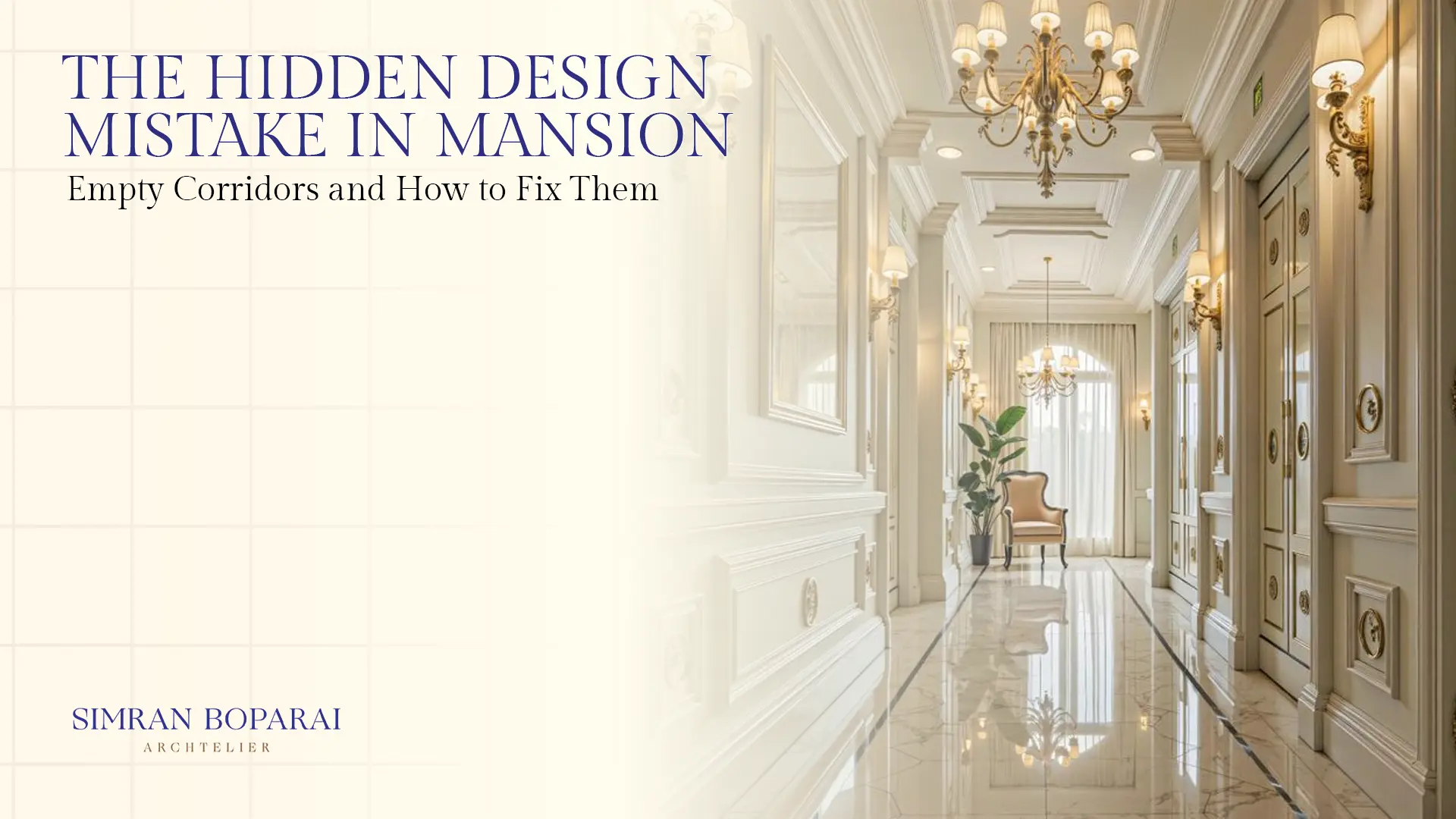
In Luxury Neoclassical Interiors, visual rhythm plays a major role. Wall panels, pilasters, or framed niches create a sense of progression. These elements guide the viewer gently, making the corridor feel intentional rather than endless.
When visual interest is introduced gradually, corridors begin to feel like curated experiences instead of long tunnels.
Using Wall Treatments to Add Depth
Bare walls are the most common reason corridors feel empty. Adding depth through architectural detailing instantly changes the experience. Wall mouldings, paneling, and subtle relief patterns add character without overwhelming the space.
In Neoclassical interior design, walls are never flat or meaningless. Even the simplest corridor benefits from structured detailing that reflects classical balance. These treatments add texture and shadow, creating richness that feels calm and refined.
This approach also strengthens the identity of high-end residential interiors, where every surface contributes to the overall story.
Lighting: The Soul of Corridor Design
Lighting is often underestimated in corridors. A single row of ceiling lights is not enough to create atmosphere. Instead, layered lighting transforms corridors into emotionally engaging spaces.
Soft ambient lighting establishes comfort, while accent lighting highlights architectural details. Wall washers, concealed coves, and focused fixtures add depth and dimension. This layered approach is a key principle of luxury lighting design, especially in classical homes.
When light and shadow interact gracefully, corridors feel alive. They no longer exist only to move through, but to be experienced.
Corridors as Storytelling Spaces
Corridors offer a unique opportunity for storytelling. These spaces can reflect the personality of the home and its occupants. Art, sculpture, and curated displays turn corridors into galleries rather than empty walkways.
In homes inspired by Luxury Neoclassical Interiors, storytelling is subtle and elegant. Artworks are carefully spaced, and decorative elements are aligned symmetrically. This restraint creates sophistication rather than clutter.
When done right, corridors become emotional pauses that prepare the mind for the next space.
Material Continuity and Flooring Choices
Flooring plays a major role in corridor perception. Interruptions in flooring break visual flow and make corridors feel fragmented. Continuous flooring helps maintain unity and lengthens the visual line.
Marble, stone, or high-quality wood finishes are often used in premium interior materials because they reflect light and enhance elegance. The continuity of material reinforces the corridor’s role as a connector while still giving it a distinct identity.
This seamless approach strengthens the overall interior spatial planning of the home.
Ceiling Design and Vertical Interest
Ceilings are often ignored in corridors, yet they offer immense potential. Coffered ceilings, subtle mouldings, or linear detailing add vertical interest and balance long horizontal spaces.
In Luxury Neoclassical Interiors, ceiling design completes the architectural language. Even a simple corridor gains grandeur when ceiling proportions are carefully designed.
Vertical detailing also helps prevent corridors from feeling monotonous, especially in large mansions.
Symmetry: The Neoclassical Advantage
Symmetry is one of the strongest tools in corridor design. Balanced elements on both sides of a corridor create order and calm. This principle is deeply rooted in classic interior architecture.
Symmetry does not mean repetition without thought. Instead, it creates rhythm while allowing subtle variations. Doors, wall panels, and lighting fixtures aligned symmetrically make corridors feel intentional and luxurious.
This is one reason why Luxury Neoclassical Interiors remain timeless and visually satisfying.
Furniture and Sculptural Elements
Corridors do not need to be empty to feel spacious. Carefully chosen furniture pieces such as console tables, benches, or sculptural elements add purpose without blocking movement.
In luxury home interiors, these elements are often minimal yet expressive. A single sculptural piece can transform a corridor into a destination rather than a passage.
The key is restraint. Each element must serve a visual or emotional purpose.
Corridors as Emotional Transitions
Corridors are emotional bridges between spaces. Moving from a lively living area to a private bedroom should feel gradual, not abrupt. Design helps manage this transition.
Through lighting, material changes, and spatial rhythm, corridors prepare the mind for what comes next. This emotional pacing is central to interior design psychology.
When corridors are designed with emotion in mind, the entire home feels more cohesive and comfortable.
Why Experience Matters More Than Size
In mansions, size alone does not guarantee luxury. Experience defines quality. Empty corridors waste potential because they offer no experience, despite their size.
Designing corridors as experiences aligns with the philosophy behind Luxury Neoclassical Interiors, where every space contributes to the home’s narrative.
Homes designed with this mindset often reflect the design sensibilities associated with studios like Simran Boparai, where circulation spaces receive as much attention as main rooms.
Modern Interpretations of Classical Corridors
While rooted in tradition, neoclassical corridors can feel modern and relevant. Clean detailing, softer color palettes, and restrained ornamentation adapt classical ideas to contemporary living.
This balance between old and new defines modern luxury homes, where timeless elegance meets modern comfort.
Corridors designed this way feel neither outdated nor empty, but refined and welcoming.
Avoiding Overdesign in Corridors
One common mistake is overdesigning corridors in an attempt to fix emptiness. Too many patterns, textures, or decorative elements can overwhelm the space.
True luxury lies in balance. In high-end residential interiors, simplicity often feels more expensive than excess.
Corridors should feel curated, not crowded.
The Long-Term Value of Thoughtful Corridor Design
Well-designed corridors age gracefully. Trends may change, but balanced proportions, good lighting, and architectural clarity remain timeless.
This is why Luxury Neoclassical Interiors continue to hold value over decades. Their corridors remain relevant because they are rooted in proportion and human experience rather than fashion.
Investing in corridor design enhances not just aesthetics but long-term livability.
A Subtle Design Philosophy
Homes designed with attention to corridors often reflect a deeper understanding of architecture. Designers like Simran Boparai emphasize clarity, flow, and emotional comfort, ensuring no space feels wasted or disconnected.
This philosophy proves that luxury is not about filling space, but about shaping experience.
Conclusion :
Empty corridors are one of the most overlooked design mistakes in mansions. They consume space without adding value, breaking the emotional flow of the home. Yet, with thoughtful design, these corridors can become some of the most elegant and memorable spaces in a residence.
By focusing on proportion, lighting, material continuity, and architectural rhythm, corridors transform into experiences rather than mere pathways. In homes inspired by Luxury Neoclassical Interiors, every corridor becomes a statement of balance, refinement, and intentional design.
When corridors are treated with respect, the entire home feels richer, calmer, and more complete.
FAQs
1. Why do corridors feel empty in large mansions?
Corridors feel empty when they lack visual interest, lighting layers, and architectural detailing. Without design intent, they become lifeless pathways.
2. How can corridors be made more luxurious?
Luxury corridors use proportion, symmetry, refined materials, and layered lighting to create elegance and emotional depth.
3. Are neoclassical corridors suitable for modern homes?
Yes. When simplified and thoughtfully detailed, neoclassical corridors blend timeless elegance with modern comfort.
4. Does corridor design really affect home experience?
Absolutely. Corridors shape how people move, feel, and connect with the space, influencing the overall atmosphere of the home.
5. What is the biggest mistake in corridor design?
Ignoring corridors during planning. Treating them as leftover spaces leads to emptiness and lost design potential.