

Introduction
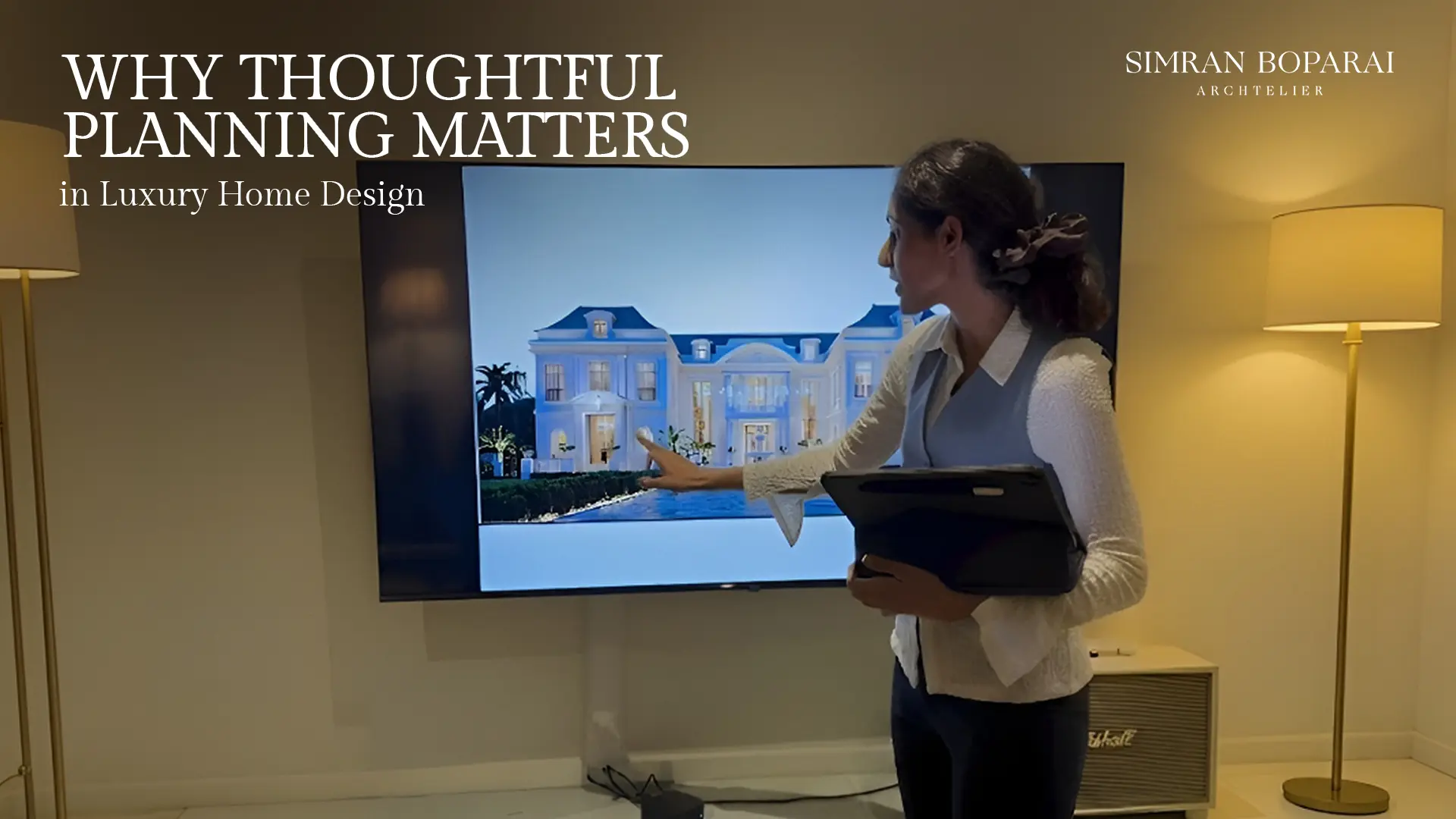
Home planning constitutes one of the essential elements which make up luxury residential design yet designers tend to prioritize finishes and styling and visual drama instead of home planning. A home may look impressive in photographs, but the design becomes worthless when the movement feels awkward and the privacy is weak and the layout does not support everyday living. The planning process needs to happen because it determines project success. Premium residences use architecture to create impressive house designs which extend beyond their external appearance. Designers must build spaces which provide residents with daily experiences of comfort and clarity and elegance and functionality. Home construction requires designers to create visually appealing spaces which develop into authentic residential environments through their hidden design elements. Simran Boparai Architecture establishes an architectural direction which supports the broader definition of luxury living. The value of a house exists beyond its external appearance. The value of a house exists in its space organization and spatial relationships and design elements which facilitate actual family activities. High-end homes require visual clarity because this attribute enables people to distinguish between attractive design features and authentic residential standards. Home design should provide users with straightforward operational methods. The space needs to handle both social events and private time. The space needs to establish private areas which protect users from outside disturbances while maintaining a clear flow between different spaces. Home planning creates this possibility. Home planning enables a large house to become a more comfortable living space.
The Meaning of Luxury in Modern Residential Design
People assess luxury homes today through more than their size and material selection. The meaning of luxury has changed. Today homeowners seek spaces which provide both upscale and practical and tidy and functional spaces for everyday use.
A modern luxury residence needs to function at multiple performance levels. The system must create an immediate strong first impression while handling all daily operations which users require. The design should maintain an elegant appearance yet avoid creating a feeling of excessive rigidity. The design must provide private spaces for users yet enable family members and guests to interact whenever they require it.
The current situation has increased the value of planning activities because it requires more detailed execution today. A premium home today is expected to host, support family life, provide retreat, enable work, and respond to changing needs over time. The results require more than decoration. The results come from architectural thinking.
The discussion about luxury living has reached an advanced stage of development. Clients are beginning to understand that true quality lies in the structure of the experience. The way rooms connect, the way light enters, the way movement flows, and the way spaces are layered all contribute more to lasting comfort than excess ever can.
Why Planning Creates Real Residential Value
The actual power which defines a luxurious residence exists beyond its individual components. The actual power of the residence emerges from its complete design integration. A grand staircase may be beautiful but it loses value when it disrupts the house’s natural movement. A large living room appears impressive, yet it diminishes the home’s daily use because it creates a separation from other areas.
The creation of architectural plans establishes the basic structure which enables architectural design to function. The system shows how different rooms connect with each other and how people navigate through the space and how various areas remain distinct while people use the area throughout the day. The project lacks complete development because the necessary system does not exist to support its execution.
Long-lasting design value begins to establish itself at this point. A well-planned home continues to perform years after completion because its logic remains useful. The system maintains comfort and clarity and flexibility throughout its operational life. People who use the space will see more problems because of the poor design choices which resulted from inadequate planning.
The need for precise home planning establishes itself as a vital component which drives all aspects of high-end residential design. The house’s visual structure which it establishes together with its visual components will determine how people experience and operate within the space.
Simran Boparai Architecture and Thoughtful Residential Design
The architectural dialogue surrounding Simran Boparai Architecture establishes a strong connection with the worth of well-executed residential architectural work. Clients of high-end residences expect more from architectural design than basic visual appeal. They want homes that combine aesthetic appeal with comfort and intelligent design.
Architectural design requires solutions that extend beyond visual appearance. The design must address various domestic activities together with their required privacy needs and family members and visitors and their ongoing home usage patterns. A well-designed house should not have its design elements developed independently from each other. The design should show how all parts of the building work together as a unified entity.
The importance of this matter increases in big houses because every poor choice becomes worse. The subpar arrangement of a compact apartment makes daily life more difficult. The entire apartment experience changes when a resident lives in a high-end home. Planning serves as the main component that determines every successful home building project. The primary function of planning serves as the fundamental element that drives every home construction project forward.
The entrance experience of a home with clear design elements establishes a different atmosphere. The space arrangement provides an effortless experience. The sequence feels controlled. The design clearly separates public areas from private spaces. The common areas maintain an open design while serving specific functions. This is the kind of residential value that architecture should deliver.
The Importance of Zoning in Luxury Homes
The primary function of zoning in residential areas serves as an essential instrument for architectural design. The system establishes operational relationships between various components of a house which determine their functional interactions. In luxury homes, zoning becomes even more important because the scale of the house often includes more varied uses.
The high-end residence contains formal lounges family living spaces guest rooms private suites service areas outdoor extensions entertainment zones wellness spaces and work areas. The house will start to feel disconnected when these elements are not properly arranged.
The home achieves functional separation through effective zoning which maintains its unified atmosphere. The solution establishes distinct boundaries for movement between shared and private areas. The social spaces enable guests to traverse through them without disrupting the secluded areas. The family areas maintain their peacefulness through their design. The service areas maintain their operational efficiency while functioning discreetly throughout the day. The home achieves better organization through its design which matches the resident’s way of living.
Home planning discovers both obvious and hidden advantages for your property. People begin to detect its presence through their first physical experience with the building when they enter a space. A well-zoned house creates calm. The system creates a natural flow which people can control at their own pace.
Circulation and the Flow of Everyday Living
The movement system of a house handles all aspects of how people move through indoor spaces. The system shows how people enter the building and how its rooms connect and their ability to use stairs and how the entire house operates as a continuous pathway instead of separate areas. Good circulation occupies a fundamental role in all high-end houses. The system determines how open spaces appear to be and which activities people engage in and their natural movement patterns through the space. The layout of a house with strong flow creates an experience that people can move through without effort. The space arrangement provides a pathway that people can follow to move through the area. The room design enables people to see each other. The house design establishes clear pathways that show proper ways to explore the space.
The movement system through the building generates resistance to movement. The system creates spaces that feel completely separate from each other while showing awkward connections between different areas. The premium finishes lose their value because the design feels less sophisticated. The visual quality of many luxury homes decreases when people see them in real life. The visual layer may be polished, but the internal experience lacks coherence. The planning process for a house establishes circulation pathways from the first stage of design. The design process examines all aspects of building entry points which rooms link together and which spaces people need to access while they move through both private and public areas and how residents interact with their home environment. The design of a building achieves its ideal performance when its circulation system maintains optimal functioning. People associate luxury with that particular type of convenience.
Privacy as a Defining Feature of Premium Homes
Luxury homes require privacy to function as their most essential element. The design of a high-end residence needs to provide various access paths which enable different ways of using its spaces. The requirement for residential spaces to maintain privacy between their different areas. The requirement for residential spaces to maintain privacy between their different sections. The design of guest areas needs to create a welcoming atmosphere while keeping their most personal areas hidden from view. Visitors should have access to family spaces while maintaining their right to privacy. Outdoor areas should provide residents with comfort while keeping their visibility to others at a minimum. Residents need work areas which function properly yet do not interrupt their home activities.
All aspects of privacy need to undergo planning for the establishment of privacy rights. The system operates through elements which include layout and hierarchy and screening systems and the arrangement of spaces and their sequential flow. The process requires more than applying surface treatment methods to achieve results.
This aspect of design becomes critical for houses which accommodate large families with multiple generations. Different people may need different levels of quiet, access, and independence. Planning needs to be done correctly because these requirements create conflicts which need solutions. The design of the house can create an atmosphere which maintains connections while establishing proper spaces for privacy.
The design of a house determines the level of comfort which residents will experience in their home. The system protects essential elements which support life inside the residence.
Natural Light, Proportion, and Spatial Quality
Architectural luxury uses light and building proportions to express value more than decorative elements. The experience of a space becomes more refined through a room which maintains regular daylight while its dimensions exceed normal size limits whereas an oversized room which lacks spatial harmony shows fewer advantages. The daylight entering a home throughout different times of the day influences its overall atmosphere. The daylighting system uses light to affect human emotions while it increases the material’s aesthetic value and provides better comfort. The proper design of lighting systems enables spaces to achieve both open and private areas that match their intended functions.
Proportion matters in the same way. The belief that larger things provide greater value shows itself in this situation. A room should be scaled to its use, its furniture, and its relationship to adjacent spaces. The emptiness of large spaces creates a feeling of detachment from their surroundings. People experience discomfort in confined areas which remain unresolved. The right proportion creates harmony.
Architectural design requires careful construction because it represents one of the most convincing reasons to support the case. A good home requires more than just space. A good home needs to have different areas arranged in an efficient way which helps create a better living experience. The various dimensions of the space create an overall atmosphere which shapes the visitor experience. The design establishes specific functions for each opening. The different spatial elements work together to create a natural flow which mirrors the daily activities of people.
A house reaches its enduring value through this particular level of dedication. Immediate effects represent only part of the evaluation process. The evaluation process involves assessing the house’s ongoing impact throughout its existence.
Designing Homes Around Real Lifestyle Needs
A home is not a showroom. The house needs to function as a real residential space because it exists within luxury architectural design. The design should provide support for daily activities and family gatherings and resting and socializing and professional tasks and storage needs and maintenance needs and future changes. The design needs to show strength in these areas to create an effective visual design.
This is the point where residential architecture demonstrates its most useful functions. The design needs to identify the specific users who will occupy the area. Families who frequently welcome guests require different spatial arrangements than families who prioritize their personal space. A home designed for multiple generations should create spaces that promote family bonding while maintaining personal space. A couple who works from home requires designated work areas that will not disrupt their home environment.
Architectural planning enables designers to incorporate essential requirements into their building designs instead of treating them as minor requirements. The design creates a sense of harmony between the home and its inhabitants. People experience emotional comfort when their needs align with their environmental conditions.
Homeowners today choose to focus on design principles because they believe these options will better serve their needs than temporary design trends. People know that finish materials will change throughout time but the layout remains essential for building design. A house that functions effectively throughout its entire space provides more value than a house that only maintains a trendy appearance.
Long-Term Benefits of a Well-Planned Luxury Home
The worth of a house which has been carefully designed becomes evident with the passage of time. The first thing people notice about the building during its initial period of existence. The layout of the space determines how people will experience their time at the location according to their normal daily activities.
A successful home design provides people with multiple options for using their living space. The design permits the home to transform according to shifting requirements. The design provides simple procedures for home upkeep. The design enables optimal space management. The design process decreases everyday disruptions. The design approach establishes home durability because its fundamental design principles maintain relevance throughout changing design trends.
This aspect holds great importance within the luxury market because people consider homes to be permanent investments. A residence which has achieved complete design satisfaction will maintain its worth both to its owner and throughout its market existence. People can sense when a home has been designed with care. The comfort feels different. The order feels different. The usability feels different.
Home design requires more than aesthetic elements because it needs technical understanding for proper study. It stands as the most direct factor which determines how long residential buildings maintain their value.
Why the Future of Luxury Design Depends on Better Planning
The future of luxury residential design is moving toward minimal design which better shows architectural elements. Homeowners require spaces which enable their well-being and their need for private space and their family activities and their need for emotional balance and their need for advanced architectural designs. They want their homes to have elegant appearance which does not hinder practical use while providing them with open space that does not result in unnecessary waste.
The current transition registers increasing importance for thorough spatial design. The modern premium home design now requires homes to meet contemporary living standards. The space needs to combine work activities with entertainment options and personal relaxation areas and service functions and social interaction spaces.
Architects today must create designs which show their artistic value while delivering functional results. Designers must create spaces which people will use according to their regular activities while maintaining visual beauty and architectural distinction. Designers who create spaces with special consideration for their customers now represent the highest standard of luxury design.
The design thinking connected to Simran Boparai Architecture fits within this direction because it highlights a more intelligent standard for residential work. The conversation now moves from visual appeal to examine how homes operate at their maximum capacity.
Conclusion
Luxury residential design is not defined only by how a house looks. The way a house functions determines its definition. A home should feel composed, comfortable, private, functional, and clear in the way every part connects. The quality of a product comes from more than its styling features. The product develops through architectural design that maintains its original vision.
Home planning serves as the foundation which creates that application of value. The process determines how people move through the space while establishing boundaries and controlling natural light and building proportions and operational efficiency for daily tasks. The system generates residential spaces which remain functional throughout time while preserving their aesthetic appeal. The system creates an atmosphere where high-end products appear to be part of everyday life instead of being designed for show.
Simran Boparai Architecture uses a complete residential design method which leads to success in creating high-quality spaces. The design of high-end residential properties transforms architectural dimensions into comfortable spaces which create visual impact for their residents.
The best homes extend beyond their ability to make a strong visual impression. The most successful projects create environments which enable people to function through their entire day with simple and stylish tools. The core advantage of proper design execution in high-end home development lies in its ability to create value.
FAQ
1. What is home planning in residential architecture?
Home planning in residential architecture is the process of organising a house through layout, zoning, circulation, privacy, and functional relationships so the home works smoothly in daily life.
2. Why is home planning important in luxury home design?
Home planning is important because it improves comfort, privacy, flow, and usability. In luxury homes, these factors define long-term value more than appearance alone.
3. How does home planning affect privacy?
Home planning helps create privacy by separating public, private, and service areas more effectively. This makes the house feel more secure, calm, and comfortable.
4. What makes a luxury home feel well planned?
A well-planned luxury home has clear zoning, smooth circulation, balanced proportions, strong light, and spaces that support both everyday routines and special occasions.
5. How does architecture improve everyday living?
Architecture improves everyday living by creating better movement, stronger comfort, more usable space, and a layout that aligns with the way people actually live.
6. Why do premium homeowners value thoughtful planning?
Premium homeowners value thoughtful planning because it creates homes that are elegant, practical, adaptable, and more satisfying to live in over the long term.