
Introduction
House and interior design is not just about picking a pretty elevation, expensive materials, or some stylish furniture. It is really about making a home that supports your lifestyle, daily pace, comfort, privacy, practical needs, and the long run.
Most people begin by gathering references, like from Pinterest, Instagram, hotels, villas, and those luxury residences. That part is fine, but it usually becomes only the first step. A home can’t really be planned by copying what seems great somewhere else. Every location, every family, the way people live, the climate, the money available, and even the future demands are all different.
That is where professional architectural services actually matter. A good home doesn’t get formed in one single decision. It is shaped through site study, space layout, movement routes, natural light, fresh air, structure, material coordination, interior detailing, and overall execution clarity, so nothing feels unclear later.
At Simran Boparai Architecture, the approach isn’t only about making the place look premium. The emphasis is on creating spaces that feel more personal, work well in everyday life, and still feel right years from now. Whether it is a private residence, a villa, a luxury apartment, a farmhouse, or even a bigger estate-scale home, the process needs clarity before design starts.
Why House and Interior Design Should Start With Lifestyle Planning
A home should not start with the question, “What style do we want?”
It should start with, “How do we live?”
Before picking the façade, flooring, furniture, or wall finishes, homeowners really need to get a handle on their actual lifestyle. Like, how many people live there, how often guests show up, whether the family tends to lean formal or informal, how much privacy they actually need, and how the place should work across the day, not just in the evening.
Good home and interior design links everyday life with spatial planning. For instance, a family that entertains a lot might want a confident arrival experience, a more traditional living area, easy access to a powder room, and a dining space that doesn’t accidentally interrupt the quieter, private family zones. Meanwhile, a family that prefers a calm atmosphere may need smoother, more controlled movement paths, private lounges, little reading corners, and bedrooms set further from the louder areas.
Key lifestyle questions before planning
Before finalising a design direction, ask
How many family members will use the home daily?
Do you need separate spaces for guests and family?
Do elderly family members need easy movement for real day-to-day use?
Will the home need a lift now or in the future?
Do you cook daily, or rely more on staff?
Do you host large gatherings often?
Do you work from home?
Do you need private outdoor spaces, somehow tucked away?
How much storage is actually required?
These questions may sound basic, but they directly affect the final layout. Without this clarity, even an expensive home can feel a bit uncomfortable after handover.
The Role of Architecture in Creating a Better Home
Architecture is kind of the backbone of any truly successful home, at least in practice. Yes, interior styling can definitely make a space look better, more coherent, even nicer… but it really can’t undo weak planning. When the room dimensions are off, the flow of movement feels fussy, the windows are set in the wrong places, or the utilities aren’t coordinated with each other, the house will keep showing functional snags, sooner or later.
That’s where professional architectural services come in, because they help homeowners choose wisely stuff that’s not easy to reverse later on. Things like site orientation, structural layout, zoning rules, where the staircase lands, ceiling heights, ventilation planning, façade design, and service routes.
Site orientation and natural light
The direction of the site affects how the home takes in sunlight, air, and heat; basically, it matters. A well-crafted residence looks at how the sun moves, the local climate, what the roadside is doing, nearby buildings and then the privacy requirements that come up.
For instance, big glass openings can look quite appealing in brochures and references, but if they get the rough afternoon sun without any real shading, the inside can end up uncomfortable. Likewise, windows that are just placed the wrong way may lower privacy or cause extra heat gain.
Smart design sort of keeps openness in balance with comfort, and it sounds simple, but it is not always.
Zoning and privacy
A good home has clear zoning maybe, like public, semi-private, and private areas should be thoughtfully separated, kind of in a quiet way. Guests really should not just walk straight into private family spaces. The staff movement should be planned in advance, without disturbing the main living areas or even slowing them down. Bedrooms should feel calm and protected, more like a quiet refuge. Entertainment areas should work, but they must not mess with the daily routines.
This kind of planning is what separates a visually attractive house from a truly liveable one.
Why Interior Design Must Be Planned Early
Interior design should not be treated as some kind of final decoration stage. It really needs to be woven into the planning process from the start, not “later”. Furniture placement, lighting, where the electrical points go, air conditioning routing, storage planning, ceiling design, wall panelling, and even material finishes all lean on early coordination.
If interiors get planned too late, homeowners tend to run into problems like switches ending up in the wrong place, awkward furniture layouts, bad lighting positioning, service lines that become visible, storage that ends up being not enough, or ceiling elements that suddenly clash.
A properly coordinated house and interior design process helps you avoid those missteps.
Furniture planning before execution
Furniture should not be picked after the room is already built. The layout should know in advance where the bed, the sofa, the dining table, wardrobes and study units, consoles, and the loose furniture will end up. That way it’s easier to line up everything while you still have control.
This helps you decide:
– Room proportions
– Electrical points
– Lighting placement
– TV wall dimensions
– Window positions
– Storage requirements
– Walking space
– Ceiling layout
– Material transitions
If furniture planning is ignored, homeowners might end up with really lovely rooms, but that does not really work in daily use.
Lighting as a design layer
Lighting is one of the most important parts of interiors, and it can really set the tone, even if people don’t notice right away. It shapes mood and comfort, and it also changes how materials show up, and if a premium stone, veneer artwork, or surface texture is lit badly, it can end up looking kind of flat.
A good lighting plan usually covers ambient lighting, task lighting, accent lighting, decorative fixtures, natural daylight control, and, if needed, some automation too. You know the small adjustments that make everything feel effortless.
Luxury is not only about costly finishes. It’s also about how those finishes get felt and experienced, rather than just seen for a moment.
Common Mistakes Homeowners Make When Deciding Design on Their Own
A lot of homeowners think they can steer the design choices by grabbing references and handing them to the vendors. But usually it turns messy fast, like there is no real thread between everything, so confusion, delays, budget issues, and a mismatch in the design show up anyway.
If someone tries to pick everything independently, it might look “cheap” at first, but without technical guidance, it can turn into a bigger expense later on.
Mistake 1: Copying reference images blindly
A reference image is not a design solution; it is really just inspiration. The room shown there might have different dimensions, ceiling height, climate, lighting, budget and lifestyle context. What seems luxurious in a showroom or in an online picture might not fit your own actual home.
Mistake 2: Picking materials before planning
A lot of homeowners go to showrooms and choose marble, tiles, veneers, lights, and fittings before the design is finalised. That feels natural, but it is risky because the materials are supposed to support the concept, not act like the boss of it.
A better sequence is planning first, then material selection later.
Mistake 3: Ignoring services
Electrical, plumbing, HVAC, drainage, automation, security, and lighting services have to be planned carefully, like you can’t just assume it’ll all work out later. If those pieces aren’t coordinated early, they end up causing execution problems, and you see those compromises during completion.
A luxury home really wants clean detailing, but that kind of “clean” comes from service planning, not only from good finishes, because finishes alone never carry the whole load.
Mistake 4: Underestimating storage
Storage is often treated like an afterthought. Yet in real homes, storage changes day-to-day comfort. Wardrobes, linen storage, kitchen storage, utility storage, staff storage, shoe storage, seasonal storage, and even hidden storage have to be planned around how the family actually lives and moves.
A clutter-free home isn’t achieved by minimal styling. It’s created by solid storage planning and nothing less.
How Professional Architectural Services Add Value
Professional design support gives homeowners more than just sketches and plans. It brings decision clarity, technical coordination, execution control, and also long-run value.
For clients who are investing in a custom home, a villa, or a luxury residence, professional guidance reduces uncertainty a lot. It also helps avoid that common gap between design imagination and site execution, which can be costly if left unchecked.
Better decision-making
A good architect or a design studio kind of helps you get a feel for what ideas actually fit your site, budget, lifestyle and long-range goals. Rather than just saying yes to every single trend, the design team runs the choices through practicality and a clear purpose. Not randomly but on purpose, you know? So in the end the home feels more personal and less like it was picked from whatever was trending that week.
Clear planning documentation
Execution really needs those detailed drawings. Like, you know, layout plans, elevation sheets, furniture layouts, reflected ceiling plans, plus electrical layouts, plumbing layouts, material specifications and then the detail drawings too. Sometimes also working drawings, all that stuff.
If the documentation isn’t there, vendors simply make assumptions. And when they assume, mistakes end up happening.
Stronger execution control
Even the best idea can slip if it gets executed only weakly. Professional architectural services – well, they tend to help align the design, the contractors, the vendors, and the site crews all at once. That way there is less miscommunication, and the work stays more near the approved concept.
A properly managed site does not live on “just talk” either. It relies on crisp drawings, quick coordination, and ongoing checks, not on verbal directions.
House and Interior Design for Luxury Homes
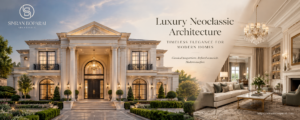
Luxury homes need deeper prep because expectations are just higher, way higher. A luxury residence is not only about imported marble, chandeliers or the big rooms. It’s more about proportion, privacy, comfort, the little detailing, service efficiency and the overall experience.
A luxury home should seem effortless, but behind that effortless feeling there is a very coordinated process.
Arrival experience
The entrance sets the tone for the home. The driveway, porch, foyer, door design, lighting, landscaping, and that first visual frame all matter. But the entrance shouldn’t just spill out the entire home right away. With controlled visibility, you get a bit more privacy, and the whole arrival feels more refined, in a quieter way, like subtle pacing almost.
Private and social zones
Luxury homes often need a few layers of living, like a formal living setup, family lounge, dining, entertainment spaces, bedrooms, outdoor areas, guest suites, wellness zones, and staff/service corners. Every part really has to be planned with a reason, not just “it looks nice”.
The success of the house and interior design in these luxury homes tends to depend on how well the zones flow into each other without causing confusion or that awkward “Wait, where am I?” feeling.
Material consistency
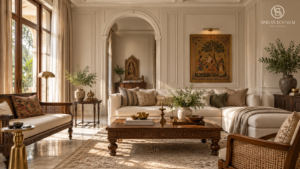
Luxury doesn’t really mean you have to use every premium material that’s out there. If you add too many finishes, a home can start looking kinda visually busy, like everything is shouting at once. A more refined material palette helps the spaces feel connected and steady, you know. You want stone, wood, metal, fabric, paint, glass, and even lighting to work as one whole set, not compete for attention.
Designing Homes That Are Future-Ready
A home shouldn’t only handle today’s needs; it also has to look at what might shift in the next 5, 10, or 15 years. Families grow, then elderly parents might move in, and suddenly the layout needs to feel right. Kids may want their own rooms; work-from-home demands can expand; and the technology around you can evolve. Even everyday habits and lifestyle preferences might change over time too.
Good design gives you room to move; it stays adaptable without making you do big reconstruction later, like, not really.
Future-ready planning ideas
Plan for lift provision where possible, I mean, if it makes sense.
Keep rooms that can shift use when needed, not just one setting.
Design wider circulation routes where they’re really needed.
Provide sufficient electrical and data points early on.
Think about smart home systems from the very start.
Plan for storage that actually works for long-term use.
Consider elderly-friendly bathrooms, and not as an afterthought.
Keep services accessible so maintenance stays straightforward.
Use durable materials in areas with heavy everyday footfall.
So yes, this is where careful expert planning gives lasting value. A home that adapts well will, in general, serve better than a home made only for immediate visual appeal.
Balancing Aesthetics and Practicality
A beautiful home should also feel easy to live in; even if that sounds simple, it actually matters. Practicality doesn’t really cut down on luxury. If anything, practical planning makes that luxury more usable, more real day by day.
For example, a striking kitchen is basically incomplete when the workflow is poor; it just feels off. A spacious living room is not that useful if the seating is uncomfortable, even with gorgeous décor. A premium bathroom becomes annoying when there is no storage, no matter how nice the finishes look. And a grand staircase can quickly turn into a hassle if daily circulation is not taken into account.
A good house and interior design mixes what looks great with what works well every single day.
Practical design elements that matter
Getting the room proportions right. Making the walking paths comfortable but still not too narrow. Place furniture with a little thought so there’s room to move around without bumping into everything. Choosing easy-care materials, and keeping maintenance simple. Also making sure the lighting has layers, not just one harsh source. Ventilation and daylight should work together and somehow feel natural. There should be privacy from neighbours, not that awkward look-through feeling. Noise control matters too, even if it sounds “fine” at first. Don’t forget storage integration, so it’s tidy without looking forced. And service access needs to be clear, so repairs or cleaning aren’t a whole production… These are not small details. They’re the things that decide if the home still feels comfortable after you move in.
The Simran Boparai Archtelier Approach
Simran Boparai Archtelier is focused on bringing homes together with architectural clarity, interior refinement, and day-to-day relevance. The process is not only about surface-level decoration; it kind of goes deeper, in a quiet way. It starts by really getting to know the client, the site, and the reason for each space, almost like mapping the intention first.
In terms of architectural services, this approach helps shape residences that are both striking to look at and dependable in everyday use. You don’t just build a nice exterior, you build something that holds up.
The studio’s design thinking is rooted in planning before styling. Meaning every key decision is examined with reference to the entire home, not treated as a lone choice. That goes for the exterior form, internal flow, furniture placement, lighting moods, material selection, services routing, and execution details too. Even the small in-between parts get attention.
A home should not feel like it’s just a bunch of showroom picks, stitched together somehow. It should feel like one coherent environment, where everything connects, and nothing feels random.
How to Start Your Home Design Journey
If you’re thinking about a new home, a villa, or some residential renovation, don’t begin by finalising materials or buying furniture. First get clarity, really, because without that, you might start going one way, then another. Just pause, take stock, and make the whole picture clearer before anything else.
Step 1: Set up your lifestyle brief.
Jot down how your family really uses the home. It helps to list your habits, routines, privacy needs, usual hosting rhythms, work demands, storage expectations, and the longer plan for what you want later.
Step 2: Look over the site.
No two places are the same. Each site has upsides and limitations; road direction, views, how sunlight comes in, local weather, nearby structures, entry points, and even the overall plot shape all sway what makes sense.
Step 3: Pin down the planning direction.
Before you even talk about finishes, the layout should already be sorted. Decide room placement, circulation, zoning, services, and the key structural choices first, not after.
Step 4: Match the interiors with the architecture.
Your interiors should grow alongside the architectural idea. So that things like lighting, furniture, ceiling style, wall treatments, and the service locations are in sync, not kind of close.
Step 5: Proceed using detailed drawings.
The final direction needs support from drawings plus specifications. That way contractors and vendors can work more cleanly, with less guesswork and fewer little surprises.
Why Design Decisions Should Not Be Random
Every little design choice seems to tangle with another one. When you change a wall, the furniture takes the hit too. When the furniture moves or even just its sizing changes, the electrical points become a different story. Changing the ceiling design, somehow, also changes how lighting will behave. And the flooring? that influences the levels plus the transitions, whether you like it or not. Even the façade openings matter, because they affect daylight, and heat goes along with that.
That is why random decision-making can quietly create problems, not immediately but surely later.
A professional house and interior design process creates a sequence, and it gives homeowners a kind of map. It clarifies what should be decided first, what can wait a bit, and what must be coordinated at the same time.
With the right process you protect the design quality, and you also reduce the chances of expensive revisions and all that frustrating back and forth.
Conclusion
House and interior design is basically a strategic process, not just a bunch of random sight choices. A successful home needs planning clarity, technical coordination, and a kind of honest understanding of how the family will really live in that space, day to day.
When architecture and interiors are thought of together, the end result is steadier. The home will look better and work better, and it will also feel more intimate, more yours. Every big decision, like zoning to lighting and material picking to storage, should stitch into one larger idea.
For homeowners looking for architectural services, the most sensible move is to start with expert support before any irreversible choices are made. Simran Boparai Archtelier helps shape homes that feel polished but also practical, and they’re built for how people live now and later.
FAQ
1. What is included in house and interior design services?
House and interior design services usually include architectural planning, layout development, façade design, interior concepts, furniture layouts, lighting plans, material selection, technical drawings, and execution coordination. The exact scope depends on the project size and service agreement.
2. Why should I hire an architect before starting my home?
Hiring an architect helps you plan the home correctly from the beginning. An architect studies the site, lifestyle needs, structure, light, ventilation, privacy, services, and long-term usability. This reduces mistakes during execution.
3. Can I design my home using online references?
Online references are useful for inspiration, but they should not be copied blindly. Your home has its own site conditions, measurements, climate, lifestyle needs, and budget. A professional designer can adapt inspiration into a practical design.
4. How early should interiors be planned?
Interiors should be planned during the architectural stage, not after construction is complete. This helps coordinate furniture, lighting, electrical points, ceiling design, storage, air-conditioning, and material details properly.
5. What makes a home feel luxurious?
A home feels luxurious when it has thoughtful planning, good proportions, privacy, comfort, quality materials, layered lighting, clean detailing, and smooth execution. Luxury is not only about expensive products. It is about how the entire space works together.