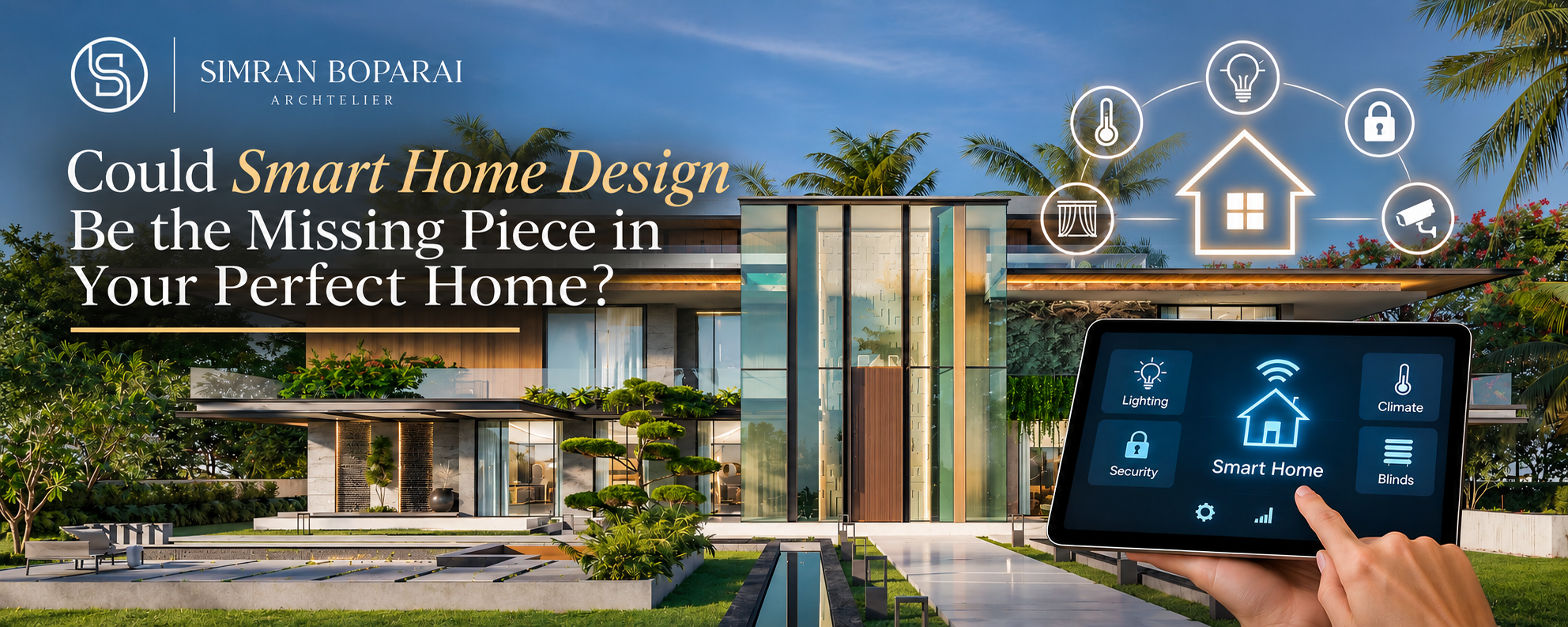
A perfect home is more than an attractive architectural structure or a beautifully decorated interior. It is a place that understands the people living in it, supports their everyday routines and creates an environment where comfort, functionality and elegance come together naturally. While homeowners often invest considerable attention in architectural layouts, premium materials, furniture and decorative details, one important aspect of contemporary residential design deserves equal consideration: technology. This is where smart home design becomes an essential part of creating a truly complete living experience.
Imagine entering your home after a long day and finding the lighting adjusted to a relaxing atmosphere, the indoor temperature already comfortable and your favourite music playing softly in the background. Curtains respond to natural daylight, security systems remain connected and different areas of the home function according to your preferences. These experiences are no longer limited to futuristic concepts. With thoughtful planning and the right technological integration, they can become part of everyday residential living.
For homeowners seeking a balance between sophistication and convenience, smart home design offers an opportunity to create spaces that look beautiful while responding intelligently to modern lifestyles. At Simran Boparai Archtelier, the relationship between architecture, interiors and functionality provides an important foundation for designing residences that feel both timeless and future-ready.
Understanding the True Meaning of Smart Home Design
Smart home design refers to the thoughtful integration of technology, automation and architectural planning to create a residence that offers improved comfort, convenience, security and efficiency. However, its purpose extends beyond installing connected devices or operating household appliances through a smartphone.
A genuinely intelligent home is designed around the requirements of its residents. Every technological feature should have a meaningful purpose and contribute to a better living experience. Automated lighting, intelligent temperature management, motorised curtains, security systems and integrated entertainment solutions are examples of features that can work together to make daily routines easier.
The most successful approach considers technology from the earliest stages of architectural development. Electrical layouts, networking infrastructure, lighting arrangements, ceiling details and equipment requirements should be coordinated with the overall design. This prevents technology from becoming an afterthought and allows it to blend naturally into the residence.
Ultimately, smart home design is about creating a home that works intelligently without losing its personality, warmth or architectural character.
Why a Beautiful Home Also Needs Intelligent Planning
A visually impressive home can still become inconvenient if its everyday functions are not planned properly. Homeowners may have beautiful interiors, luxurious furniture and carefully selected materials, but managing multiple household systems manually can sometimes affect the overall experience.
Consider a large residence with several bedrooms, entertainment spaces, formal living areas, landscaped surroundings and outdoor seating. Managing lighting, cooling, security and entertainment independently across these spaces can become unnecessarily complicated.
Intelligent planning helps connect these different elements through coordinated systems. Homeowners can manage selected functions from central control panels, mobile applications or voice-enabled interfaces, depending on the technology installed.
More importantly, smart systems allow different rooms to serve different purposes without requiring complicated manual adjustments. A comfortable bedroom environment, an entertaining living room and a productive home office can each have customised settings.
The objective is to ensure that the home supports the homeowner rather than requiring the homeowner to constantly manage the home.
How Luxury Smart Home Design Elevates Everyday Living
Luxury is often associated with spacious rooms, beautiful finishes, sophisticated furniture and exclusive architectural details. However, contemporary luxury is increasingly connected with the quality of everyday experiences.
Luxury Smart Home Design brings convenience and personalisation into this experience by allowing different elements of the residence to work together.
Automated Lighting for Different Moods
Lighting has the power to influence the appearance and atmosphere of an interior. A beautifully designed living room can feel completely different under bright daytime lighting compared with soft evening illumination.
Smart lighting systems allow homeowners to create customised settings for different occasions. A morning setting can provide comfortable illumination, while an evening setting can introduce warmer lighting for relaxation. Special lighting scenes can also be created for family gatherings, formal dinners or entertainment.
Lighting automation can further support energy management by adjusting illumination according to occupancy and available daylight.
Intelligent Temperature and Climate Control
Comfortable indoor temperatures are an important part of residential design, particularly in regions where seasonal temperature variations can be significant.
Smart climate control systems allow homeowners to manage heating, cooling and selected ventilation functions according to their requirements. Different rooms can have individual temperature settings where the system supports zoned control.
For example, bedrooms can maintain comfortable sleeping conditions while living areas follow a different schedule. Remote access can also help homeowners adjust settings before arriving home.
When combined with good architectural planning, shading, insulation and natural ventilation, intelligent climate management can contribute to a more comfortable and energy-conscious residence.
Motorised Curtains and Window Treatments
Window treatments are important architectural and interior elements because they influence privacy, daylight, visual balance and indoor comfort.
Motorised curtains and blinds provide convenient control over these functions. They can be operated through wall controls, mobile applications or automated schedules.
In a luxury residence with large windows, double-height spaces or extensive glazing, motorised treatments can be particularly useful. They can help manage daylight, maintain privacy and complement the overall interior design.
Smart Security and Access Management
A comfortable home should also provide a sense of security. Modern residential technology offers several solutions that help homeowners monitor and manage access to their properties.
Depending on the requirements, these may include smart locks, video doorbells, motion sensors, surveillance cameras and access-control systems.
Remote monitoring can be particularly helpful for homeowners who travel frequently or manage larger properties. However, security systems should always be selected carefully, with appropriate attention to data protection, secure configuration and professional installation.
Modern Smart Home Interiors: Where Technology Meets Aesthetics
One of the biggest challenges in contemporary residential design is integrating technology without affecting the visual quality of the interiors.
Modern Smart Home Interiors are not defined by the number of screens, speakers or electronic devices visible throughout a residence. Instead, they focus on creating an environment where technology becomes a natural extension of the interior architecture.
A minimalist living room, for example, should not be dominated by multiple control panels and exposed cables. Speakers can be integrated into carefully planned ceiling details, control interfaces can be positioned discreetly and equipment can be accommodated within designated cabinetry.
Similarly, a luxury bedroom should maintain its peaceful atmosphere while incorporating convenient lighting, curtain and temperature controls.
Material selection also plays an important role. Natural stone, timber, textured finishes, refined metal accents and carefully designed furniture can establish a sophisticated interior language while technology remains visually understated.
The goal is to achieve a balance where innovation enhances the design instead of competing with it.
The Importance of Integrating Technology During Architectural Planning
One of the most common mistakes in residential automation is introducing technology after the architectural and interior design decisions have already been finalised.
Although certain wireless devices can be installed later, more comprehensive automation systems may require dedicated wiring, power supplies, network connections, equipment spaces and carefully coordinated electrical layouts.
Planning these requirements during the architectural stage can prevent unnecessary modifications.
Electrical and Networking Infrastructure
A smart residence needs reliable infrastructure to support communication between connected devices. Architects and technology specialists should coordinate power requirements, control points, network connections and equipment locations.
The electrical layout should also account for possible future upgrades. Providing accessible wiring routes and sufficient infrastructure can make it easier to introduce new technologies without extensive renovation.
Ceiling and Wall Coordination
Smart technology can influence ceiling and wall design in several ways. Recessed speakers, lighting sensors, concealed wiring, automated curtain tracks and control panels all require suitable positioning.
Coordinating these features early helps maintain clean architectural lines and prevents unnecessary visual interruptions.
Furniture and Equipment Placement
Furniture planning should also consider the technology required within each space. Charging points, entertainment equipment, control panels and integrated appliances need suitable locations.
For example, a media wall should accommodate equipment without compromising its proportions, while a home office should provide practical access to power and connectivity.
When architecture, interiors and technology are planned together, the final residence feels more cohesive and comfortable.
Smart Home Design for Different Areas of Your Residence
Every room has a different purpose, which means automation should be adapted to how each space is used.
Living Room and Entertainment Spaces
The living room is often the centre of family interaction and social gatherings. Integrated entertainment systems, adjustable lighting, automated curtains and convenient climate controls can improve its functionality.
Homeowners can create different settings for watching films, hosting guests or spending quiet evenings with family. Technology should remain discreet so that furniture, artwork and architectural details continue to define the space.
Bedroom and Private Retreats
Bedrooms should provide a peaceful environment where comfort and relaxation take priority. Smart lighting, automated window treatments, temperature controls and convenient bedside interfaces can make everyday routines more comfortable.
A well-designed bedroom should allow residents to control essential functions without introducing unnecessary screens or complicated technology.
Kitchen and Dining Areas
Modern kitchens combine practical workspaces with social interaction. Smart appliances, suitable lighting controls, connected ventilation and selected automated functions can improve convenience.
In dining spaces, adjustable lighting can help create different atmospheres for everyday meals and formal occasions. The technology should support the overall interior composition while maintaining an uncluttered appearance.
Home Offices and Study Areas
As working from home becomes an established part of modern lifestyles, dedicated workspaces require careful planning. Reliable connectivity, appropriate lighting, convenient charging points and comfortable temperature management can improve the working environment.
Smart controls can also help separate professional activities from personal living routines.
Outdoor Spaces and Landscaped Areas
Smart technology can extend beyond the interiors. Landscape lighting, outdoor entertainment systems, automated irrigation and selected security features can improve the functionality of gardens, terraces and outdoor seating areas.
For larger residences and luxury villas, these features help create a more connected experience between indoor and outdoor spaces.
Can Smart Home Design Make a Residence More Energy Efficient?
Energy efficiency is becoming an important consideration for homeowners who want their residences to combine comfort with responsible resource consumption.
Smart home design can support this objective by helping residents understand and manage how energy is used throughout the property.
Automated lighting can reduce unnecessary electricity consumption by responding to occupancy or daylight conditions. Smart climate systems can follow schedules and adjust temperatures according to selected preferences. Energy monitoring systems can also provide useful information about household consumption.
However, technology should not replace fundamental architectural principles.
Building orientation, natural ventilation, appropriate shading, insulation, window placement and material selection remain important factors in creating an energy-conscious home.
For Indian residences, these considerations deserve particular attention because climate conditions can vary considerably between regions. Combining passive design strategies with intelligent automation can create a more balanced approach to residential comfort.
Personalisation: The Real Difference Between an Automated House and a Smart Home
Every family has its own lifestyle, preferences and daily routines. Therefore, the ideal smart home should never follow a completely standardised formula.
A family with young children may prioritise safety, convenient lighting and security monitoring. Frequent travellers may prefer remote access and automated security features. Homeowners who enjoy entertaining may require integrated audio systems, customised lighting scenes and convenient control over different entertainment areas.
The design process should begin by understanding these requirements.
It is also important to consider the needs of different generations living under one roof. Some residents may prefer voice controls, while others may find traditional switches easier to use. A well-planned system should provide intuitive control options for everyone.
Personalisation ensures that technology becomes genuinely useful rather than simply adding complexity to the home.
Common Mistakes to Avoid When Planning a Smart Home
Despite the advantages of automation, poor planning can create unnecessary complications.
One common mistake is selecting technology based entirely on trends. Not every new device or automation feature will improve a homeowner’s lifestyle. The focus should remain on practical requirements and long-term usability.
Another mistake is installing multiple systems that do not communicate effectively with one another. Compatibility should be considered before purchasing equipment, and homeowners should understand which platforms and protocols the selected products support.
Ignoring future requirements can also become a problem. Technology continues to evolve, so infrastructure should allow reasonable flexibility for upgrades and additional devices.
Homeowners should also avoid making interiors excessively dependent on digital controls. Essential functions should remain accessible through practical alternatives wherever possible.
Finally, privacy and cybersecurity should never be overlooked. Strong passwords, secure networks, regular software updates and trusted professional installation are important parts of a responsible smart home strategy.
How Simran Boparai Archtelier Approaches Modern Residential Living
Creating a successful luxury residence requires an understanding of how architecture, interiors and everyday functionality influence one another.
At Simran Boparai Archtelier, residential design focuses on bringing together visual elegance, thoughtful planning and practical living requirements. This design philosophy is particularly relevant when considering technology as part of the overall architectural experience.
A smart home should not feel like a collection of separate technological installations. Instead, its systems should complement the architectural character, interior detailing and personal preferences of the homeowner.
From considering lighting arrangements and spatial planning to coordinating technology requirements and interior finishes, an integrated design approach helps establish consistency throughout the residence.
The intention is to create homes that feel sophisticated without becoming unnecessarily complicated. Whether designing a contemporary residence or an expansive luxury villa, the relationship between beauty and functionality remains important.
With thoughtful architectural planning, Smart Home Design can become part of a larger vision for creating personalised, comfortable and future-ready living environments.
The Future of Smart Home Design: What Can Homeowners Expect?
Residential technology continues to develop, creating new opportunities for more personalised and connected living experiences.
Artificial intelligence is expected to influence how homes respond to individual preferences and routines. Depending on the systems installed, future solutions may offer more adaptive lighting, temperature management and energy optimisation.
Wellness-focused technology is another emerging direction. Indoor air-quality monitoring, intelligent lighting and environmental controls can help homeowners understand and manage aspects of their indoor surroundings.
Integration with renewable energy systems and home energy storage may also become increasingly relevant as homeowners explore more efficient ways to manage electricity consumption.
At the same time, the visual language of luxury residences is likely to continue favouring discreet technology. Concealed equipment, minimal interfaces and integrated controls will help maintain the elegance of carefully designed interiors.
The future is not simply about introducing more devices. It is about making technology more intuitive, adaptable and meaningful.
Conclusion: Is Smart Home Design the Missing Piece in Your Perfect Home?
A perfect home is not defined by architecture alone, nor is it created through beautiful interiors and expensive materials in isolation. It is the result of thoughtful decisions that bring together aesthetics, comfort, functionality and the needs of the people who live there.
Smart home design adds another dimension to this experience by allowing technology to support everyday routines, improve convenience, enhance security and contribute to more efficient living.
From automated lighting and climate management to personalised entertainment, intelligent security and future-ready infrastructure, the possibilities are extensive. Yet the real value lies in selecting the right solutions and integrating them into the residence with care.
Luxury Smart Home Design and Modern Smart Home Interiors demonstrate that technology and elegance do not have to exist separately. When considered from the beginning, they can work together to create a cohesive and welcoming environment.
At Simran Boparai Archtelier, the vision of contemporary residential design is centred on creating spaces where artistry meets functionality. A truly intelligent home should not simply impress visitors with its technology. It should make everyday life more comfortable, effortless and meaningful for the people who call it home.
Perhaps the missing piece in your perfect home is not another decorative feature or architectural statement. It is the thoughtful integration of technology that makes every part of your home work beautifully together.
Frequently Asked Questions About Smart Home Design
1. What is smart home design?
Smart home design involves integrating automation and connected technologies into residential architecture to improve convenience, comfort, security and energy management. It considers how different household systems can work together to support everyday living.
2. What features should a luxury smart home include?
A luxury smart home may include automated lighting, intelligent climate control, motorised curtains, advanced security, integrated entertainment, smart appliances and energy monitoring. The selection should depend on the homeowner’s lifestyle and requirements.
3. When should smart home technology be planned?
Ideally, smart home requirements should be considered during the initial architectural planning stage. This allows electrical layouts, networking infrastructure, lighting arrangements and equipment locations to be coordinated with the overall design.
4. Can smart home technology complement luxury interiors?
Yes. Modern Smart Home Interiors focus on integrating technology discreetly through concealed wiring, integrated speakers, minimal control panels and carefully planned equipment spaces. This allows automation to enhance the interiors without affecting their visual appeal.
5. Does smart home design help improve energy efficiency?
Smart lighting, occupancy sensors, energy monitoring and intelligent climate controls can help manage household energy consumption. Their effectiveness depends on the systems selected, their configuration and the overall architectural performance of the residence.
6. Is smart home design suitable for large villas?
Yes. Large villas can benefit from coordinated automation across multiple floors, bedrooms, living areas, entertainment spaces, gardens and security zones. Proper planning helps different systems function together while allowing individual areas to be controlled according to their requirements.