
Introduction
Finding the right architect and interior designer can transform the way a space is imagined, planned, and experienced. Architecture defines the structure, proportions, movement, and relationship of a building with its surroundings, while interior design shapes the atmosphere, functionality, materials, and visual identity within it. When both disciplines work together, the result can be a cohesive environment where every detail feels intentional.
Today’s luxury homeowners and discerning clients are looking beyond attractive façades and fashionable interiors. They want spaces that reflect their personality, support their lifestyle, and remain timeless for years. This is where an integrated design approach becomes especially valuable.
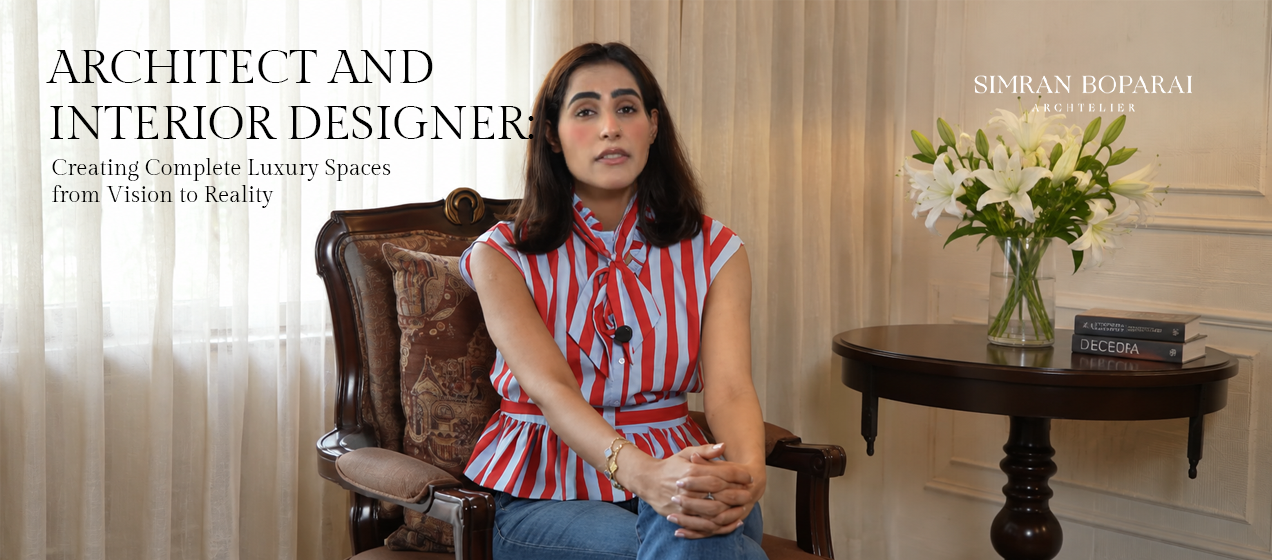
Simran Boparai represents a design philosophy that brings architecture and interiors together as parts of one complete story. Through Simran Boparai Archtelier, design thinking can extend from spatial planning and architectural character to material selection, lighting, furniture, and interior detailing.
This approach demonstrates why choosing an experienced architect and interior designer can be an important decision for residential and luxury projects.
What Does an Architect and Interior Designer Do?
An architect and interior designer combine two closely connected areas of design expertise. Architecture focuses on the building, its structure, spatial organization, proportions, circulation, and connection with the surrounding environment. Interior design focuses on how those spaces function and feel once people occupy them.
Although architecture and interior design can be handled separately, integrating them from the beginning can create stronger design continuity.
An integrated designer considers questions such as the following:
- How should people move through the property?
- How should natural light enter each space?
- Which rooms should feel connected?
- What materials complement the architectural language?
- How should furniture influence spatial planning?
- Where should statement lighting or artwork be positioned?
- How can privacy and openness be balanced?
- How can the interior reinforce the building’s identity?
Instead of treating architecture as one project and interiors as another, an integrated approach considers the entire property as a single experience.
Why Integrated Architecture and Interior Design Matter
A building may have impressive architecture, but if its interiors feel disconnected, the overall experience can become inconsistent. Similarly, beautifully decorated rooms cannot compensate for poor planning, awkward circulation, or insufficient natural light.
An integrated architect and interior designer can coordinate these elements from the early stages.
1. Better Spatial Planning
Good design begins with understanding how a space will be used.
A luxury residence, for example, may require distinct areas for entertaining guests, spending time with family, working privately, relaxing, and hosting overnight visitors. Each zone needs an appropriate relationship with the others.
Architectural planning establishes these relationships, while interior planning refines them through furniture layouts, storage, lighting, finishes, and details.
2. Stronger Visual Continuity
When architecture and interiors are designed together, materials and forms can flow naturally throughout the property.
The façade may establish a particular architectural vocabulary that continues through the following:
- Entrance spaces
- Staircases
- Living areas
- Kitchens
- Bedrooms
- Bathrooms
- Corridors
- Outdoor areas
This creates a visual language instead of a collection of unrelated rooms.
3. More Effective Material Selection
Materials influence much more than appearance. They affect texture, durability, light reflection, acoustics, maintenance, and atmosphere.
An integrated designer can consider materials at both architectural and interior levels.
For example, stone selected for an exterior feature may inspire flooring or wall detailing inside. Timber elements may continue from the façade into cabinetry or ceiling treatments. Metal finishes may be repeated across architectural screens, lighting, hardware, and furniture.
Such continuity can make a project feel carefully composed.
Simran Boparai and a Holistic Design Philosophy
Simran Boparai is associated with a design approach that views architecture and interiors as interconnected components of a larger spatial narrative.
Rather than focusing only on visual trends, the design process can explore how proportions, movement, light, materials, furniture, and functionality interact.
This holistic perspective becomes particularly relevant for luxury residences where clients often expect personalization rather than generic design solutions.
A successful luxury space should not simply look expensive. It should feel considered.
The proportions should feel comfortable. Movement should feel natural. Lighting should support different moods. Materials should communicate quality without becoming excessive. Furniture should complement the architecture rather than compete with it.
This balance is one of the defining challenges of high-end design.
Designing Around the Client’s Lifestyle
One of the biggest advantages of working with an integrated architect and interior designer is the opportunity to design around the people who will actually use the space.
Every client has different priorities.
Some may value entertaining and require expansive social spaces. Others may prefer privacy, wellness, home offices, libraries, or intimate family areas.
Instead of beginning with a predetermined style, the design process can begin with lifestyle questions.
Understanding Daily Routines
How a person wakes up, works, entertains, relaxes, and moves around their home can influence spatial planning.
For example, a homeowner who frequently hosts guests may benefit from:
- A welcoming entrance sequence
- Connected living and dining spaces
- A strategically positioned kitchen
- Indoor-outdoor entertainment zones
- Guest accommodation with appropriate privacy
A client who values quietness may require the following:
- Private courtyards
- Reading spaces
- Acoustic separation
- Personal retreats
- Controlled views
- Layered lighting
These decisions demonstrate how architecture and interior design can respond to individual lifestyles.
The Role of Natural Light
Natural light is one of the most powerful design elements available to an architect.
Windows, skylights, courtyards, openings, screens, and orientation can influence the quality of daylight throughout a building. Interior finishes then determine how that light is reflected, softened, or absorbed.
An integrated architect and interior designer can consider daylight from the beginning rather than treating lighting as a later decorative decision.
Light can
- Highlight architectural textures
- Make rooms appear more spacious
- Create visual focal points
- Enhance natural materials
- Establish different moods
- Connect interiors with outdoor surroundings
Luxury design often depends on subtle experiences like these rather than excessive ornamentation.
Creating Interiors That Complement Architecture
Interior design becomes stronger when it responds to the architecture instead of being applied independently.
A dramatic staircase can become a sculptural feature. A double-height living room can be enhanced through carefully selected lighting and furniture proportions. A courtyard can become a visual extension of the interior.
This relationship between architecture and interiors allows designers to create layered spaces.
For example, a large living area may include the following:
- Architectural wall treatments
- Bespoke furniture
- Decorative lighting
- Art pieces
- Natural stone
- Textured fabrics
- Carefully positioned accessories
Each component should contribute to the larger composition.
The Importance of Proportion and Scale
Luxury is not always about larger spaces or more expensive materials. Often, it is about proportion.
Furniture that is too large can make a room feel crowded. Small furniture in a large room can appear disconnected. Lighting fixtures need to relate to ceiling heights and room dimensions. Artwork should have an appropriate relationship with walls and surrounding objects.
An experienced architect and interior designer considers these relationships carefully.
Proportion can influence:
- Comfort
- Visual balance
- Circulation
- Symmetry
- Spatial hierarchy
- Perceived luxury
This is why professional design goes beyond selecting attractive products.
Materials That Build a Timeless Identity
Trends can change quickly, but well-designed spaces can remain relevant for decades.
A timeless interior often relies on carefully selected materials rather than excessive decorative trends.
Natural stone, timber, metal, glass, plaster, textured fabrics, and handcrafted elements can create depth and character.
The goal is not necessarily to use the most expensive material available. Instead, the emphasis should be on selecting materials that suit the architectural concept and the client’s lifestyle.
Simran Boparai can be associated with an approach where materials become part of the spatial narrative rather than simply decorative finishes.
Lighting as an Architectural Element
Lighting can dramatically change how architecture and interiors are perceived.
A sophisticated lighting plan can combine the following:
- Ambient lighting
- Accent lighting
- Task lighting
- Decorative fixtures
- Cove lighting
- Architectural illumination
The result is greater flexibility throughout the day.
A living room may require bright lighting during social gatherings but a softer atmosphere in the evening. Bedrooms may benefit from layered, indirect illumination. Art and architectural features may require focused accent lighting.
When lighting is considered alongside architecture and interiors, it can become an integral part of the design.
Balancing Luxury and Functionality
One common misconception is that luxury design is primarily about visual extravagance.
In reality, sophisticated design often depends on functionality.
Hidden storage, carefully planned circulation, ergonomic kitchens, integrated technology, comfortable furniture, and well-positioned services can dramatically improve everyday living.
A luxury residence should feel effortless to use.
This is where an architect and interior designer can bring together aesthetic ambition and practical requirements.
The best design decisions are often the ones that users notice through experience rather than consciously seeing.
Architecture, Interiors, and Personal Identity
Every successful project should have a recognizable identity.
That identity can emerge through:
- Architectural geometry
- Material palettes
- Colour relationships
- Lighting
- Furniture
- Artwork
- Landscaping
- Custom detailing
Rather than copying a particular trend, an integrated design process can create a property that feels unique to its owner.
This is especially important in premium residential projects, where personalization is increasingly becoming a defining aspect of luxury.
Why Choose an Integrated Design Approach?
Working with separate professionals for architecture and interiors can sometimes create communication gaps.
An integrated architect and interior designer can potentially streamline the process by maintaining a consistent design vision.
Benefits can include:
Unified Design Direction
The architectural concept and interior language can develop together.
Improved Coordination
Materials, dimensions, lighting, furniture, and architectural details can be considered collectively.
Greater Personalization
The client’s lifestyle can influence both the building and its interiors.
Better Spatial Relationships
Furniture and interior functions can be considered during architectural planning.
Stronger Final Experience
The completed property can feel like one coherent environment.
The Future of Luxury Design
The future of luxury architecture and interiors is moving toward personalization, sustainability, technology, and experiential design.
Clients increasingly want homes that provide comfort without sacrificing character. They are also becoming more conscious of natural materials, energy efficiency, indoor environmental quality, and long-term functionality.
An integrated designer is well positioned to consider these requirements collectively.
Future luxury spaces may increasingly feature the following:
- Passive design principles
- Smart home technology
- Energy-efficient systems
- Natural materials
- Flexible layouts
- Wellness-oriented spaces
- Indoor-outdoor connections
- Bespoke furniture
- Art-focused interiors
- Personalized lighting environments
The focus is shifting from simply creating visually impressive buildings to creating meaningful environments.
What Makes a Design Truly Successful?
A successful project is not defined by one spectacular element.
Instead, it is the combination of many thoughtful decisions.
The entrance should establish the right first impression. Circulation should feel intuitive. Rooms should have appropriate proportions. Materials should work together. Lighting should create an atmosphere. Furniture should support the architecture. Outdoor spaces should connect naturally with interiors.
Most importantly, the completed space should feel authentic to the client.
This is where the roles of an architect and interior designer become especially valuable.
By considering the entire project as one design experience, architecture and interiors can reinforce one another rather than compete.
Conclusion
Choosing an architect and interior designer can provide a more integrated way to approach sophisticated residential and commercial spaces. Architecture creates the foundation of a project, while interior design gives that foundation personality, comfort, functionality, and atmosphere.
Through a holistic design philosophy, Simran Boparai and Simran Boparai Archtelier represent the idea that exceptional spaces should be planned as complete experiences. From spatial planning and natural light to materials, furniture, lighting, and personal details, every element can contribute to a unified design story.
For clients seeking distinctive and highly personalized environments, the combination of architectural thinking and interior expertise can offer an important advantage.
Ultimately, great design is not simply about how a property looks. It is about how naturally it works, how beautifully it ages, and how deeply it connects with the people who experience it.
FAQ
1. What do an architect and an interior designer do?
An architect and interior designer can combine architectural planning with interior design to create a more cohesive project. This may include spatial planning, materials, lighting, furniture layouts, finishes, and overall design coordination.
2. Why should architecture and interior design be planned together?
Planning them together can improve spatial coordination, material continuity, lighting integration, furniture placement, and overall visual consistency. It can also reduce conflicts between architectural and interior requirements.
3. Who is Simran Boparai?
Simran Boparai is associated with Simran Boparai Archtelier and a design approach focused on creating thoughtfully planned architectural and interior environments.
4. Is an integrated architect and interior designer suitable for luxury homes?
Yes. An integrated approach can be particularly useful for luxury residences because it allows architecture, interiors, materials, lighting, furniture, and lifestyle requirements to be considered as one comprehensive design.
5. What should clients consider when choosing an architect and interior designer?
Clients should consider design philosophy, portfolio quality, project experience, communication, attention to detail, understanding of lifestyle requirements, and the ability to coordinate architecture and interiors into a cohesive final result.