
Introduction
A legacy home is more than a beautifully designed residence. It is a carefully considered environment shaped by decisions that can remain relevant for decades. From the orientation of the building and movement between spaces to material selection, natural light, proportions, privacy, and long-term functionality, every detail contributes to the character of the home.
This is where an architectural consultant plays an important role.
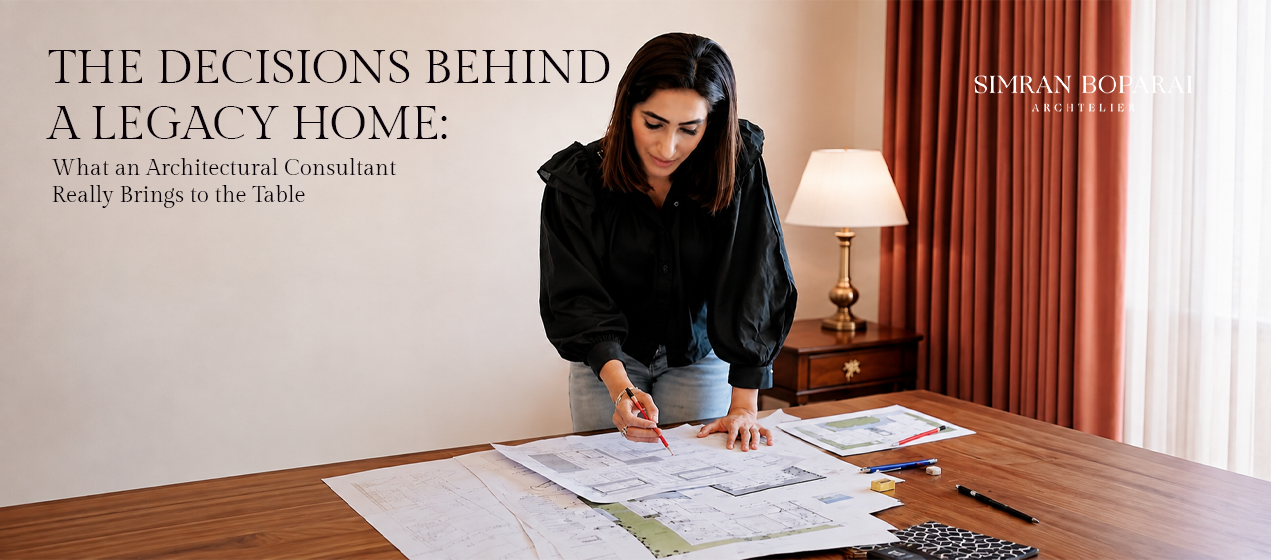
While architecture is often associated with drawings, façades, floor plans, and construction, the role of an architectural consultant goes much deeper. It involves understanding how a home should work, how it should respond to its surroundings, and how design decisions can create lasting value for the people who live there.
For homeowners planning a sophisticated residence, working with the right design professional can help transform a collection of ideas into a cohesive architectural vision. An experienced architect such as Simran Boparai Architect approaches residential design by considering the relationship between planning, lifestyle, aesthetics, materials, and experience.
A legacy home does not necessarily need to follow every trend. Instead, it needs thoughtful decisions that allow the architecture to remain meaningful long after current design fashions have changed.
What Does an Architectural Consultant Actually Do?
An architectural consultant provides strategic design guidance throughout the architectural process. The role can begin before detailed drawings are developed and continue through important design and execution decisions.
The consultant evaluates the project from multiple perspectives, including:
- Site conditions
- Spatial planning
- Lifestyle requirements
- Architectural character
- Natural light and ventilation
- Circulation and movement
- Material selection
- Interior-architecture relationships
- Structural considerations
- Future functionality
- Construction feasibility
The objective is not simply to make a home look impressive. It is to ensure that the decisions behind the design work together.
A large house, for example, can still feel uncomfortable if the circulation is poorly planned. Expensive materials may not create a luxurious atmosphere if proportions and lighting are neglected. Similarly, a visually striking façade may have little connection with the experience of the interiors.
An architectural consultant helps connect these individual elements into one architectural language.
Why Legacy Homes Require Better Decisions
A legacy home is expected to survive changing lifestyles, preferences, and design trends. That makes decision-making particularly important.
The design must answer today’s requirements without becoming excessively dependent on today’s trends.
A successful legacy residence often combines three qualities:
Timelessness: The architecture should retain its relevance over time.
Personalisation: The home should reflect the personality and lifestyle of its residents.
Adaptability: Spaces should be capable of supporting changing needs.
This requires a balance between aesthetics and practicality.
An architectural consultant can help homeowners distinguish between decisions that are genuinely valuable and those that are simply fashionable. This distinction becomes especially important in luxury residential projects, where numerous materials, technologies, finishes, and design possibilities are available.
1. The First Decision: Understanding the Site
Every meaningful architectural project begins with the site.
The location of the property influences how the home should be positioned, how rooms receive daylight, where openings should be created, and how outdoor spaces can become part of the overall experience.
A thoughtful consultant considers factors such as the following:
- Site orientation
- Sun movement
- Prevailing winds
- Views
- Neighbouring properties
- Access points
- Existing landscape
- Privacy
- Local climate
- Surrounding architecture
Instead of forcing a predetermined design onto the land, the design can emerge from the characteristics of the site.
This approach can make the residence feel more connected to its surroundings.
For a luxury home, this relationship is particularly important. A garden, courtyard, terrace, pool, or landscape feature can become an extension of the architecture when planned from the beginning rather than added later.
2. Planning the Home Around Movement
One of the most overlooked elements of residential architecture is movement.
A home should guide people naturally from one space to another. Entry sequences, public areas, private bedrooms, family spaces, service areas, and outdoor zones all need appropriate relationships.
An architectural consultant studies these movement patterns before finalising the planning strategy.
For example, the arrival experience may move through the following:
Gate → Entrance → Transitional Space → Formal Area → Family Zone → Private Areas
This sequence can create a sense of discovery.
At the same time, service circulation may need to remain discreet so that household operations do not interfere with the experience of formal spaces.
The best homes often feel effortless because the planning behind them is highly deliberate.
3. Creating Public and Private Zoning
Privacy is another major consideration in luxury residential design.
A residence may include formal living rooms, dining areas, lounges, bedrooms, family rooms, entertainment spaces, offices, and service areas. Treating all these spaces in the same way can create unnecessary visual and functional conflicts.
Strategic zoning allows different parts of the home to serve different purposes.
Public spaces can be more open and welcoming, while private spaces can become quieter and more controlled.
This zoning is not only about walls and doors. It can also be achieved through:
- Changes in ceiling height
- Material transitions
- Landscaping
- Corridors
- Screens
- Light levels
- Furniture placement
- Courtyards
- Changes in floor levels
This is where architectural consultation becomes more valuable than simply selecting attractive finishes.
4. Designing for Natural Light
Natural light has a significant influence on how architecture is experienced.
The same material can appear completely different depending on the direction, intensity, and quality of light falling on it.
An architectural consultant considers daylight during the planning stage rather than treating lighting as a finishing detail.
Large windows, skylights, clerestories, courtyards, shaded openings, and carefully positioned glazing can introduce natural light while maintaining privacy and environmental comfort.
The goal is not necessarily to maximise glass.
Instead, the objective is to introduce the right amount of light into the right space.
Morning light may be ideal for bedrooms or breakfast areas, while controlled daylight can create a softer atmosphere in living spaces.
This thoughtful relationship between architecture and light can make a home feel different throughout the day.
5. Material Selection With a Long-Term Perspective
Materials are often one of the largest investments in a luxury residence.
Choosing them only because they are currently popular can make a home feel dated when trends change.
An architectural consultant looks at materials through several lenses:
- Durability
- Maintenance
- Texture
- Colour
- Climate suitability
- Aging characteristics
- Relationship with other materials
- Cost
- Availability
- Craftsmanship
Natural stone, timber, metal, glass, plaster, concrete, and other materials can each contribute a distinct character.
But the real value comes from how they are combined.
A legacy home does not need hundreds of materials. A carefully edited palette can often create a stronger and more sophisticated result.
6. Balancing Architecture and Interior Design
Architecture and interiors should not be treated as unrelated stages.
The location of a staircase, the height of a ceiling, the size of a window, or the proportion of a wall can directly influence furniture planning and interior atmosphere.
This is why collaboration between architectural and interior design thinking is essential.
The design philosophy associated with Simran Boparai Architect can be understood through this broader perspective: architecture is not simply the exterior shell of a building; it establishes the framework within which interiors, light, materials, furniture, and daily life come together.
When architecture and interiors are considered together, elements such as lighting, built-in furniture, artwork, circulation, and spatial proportions can feel naturally integrated.
7. Making Luxury Feel Personal
Luxury architecture is not necessarily about making every room elaborate.
In many cases, true luxury comes from personalisation.
A home may include a reading room because the homeowner enjoys books, a carefully designed entertaining space because the family frequently hosts guests, or a private courtyard because outdoor living is important to them.
The consultant’s role is to translate these preferences into architectural decisions.
Instead of asking only, “What style do you like?” a better design conversation asks:
- How do you spend your mornings?
- How often do you entertain?
- Which spaces need privacy?
- How should guests move through the home?
- Do you prefer open or intimate spaces?
- What objects or collections matter to you?
- How might your lifestyle change in the future?
The answers can shape the architecture more meaningfully than a style label.
8. Thinking About the Future
A legacy home should not be designed only for the first few years of occupation.
Families evolve. Children grow up. Work patterns change. Technology develops. Accessibility requirements may become more important.
An architectural consultant can help incorporate flexibility into the planning.
A room initially used as a study may later become a bedroom. A guest suite can be planned for independent access. Large family spaces can accommodate changing furniture arrangements.
Future-ready planning does not mean predicting every possible scenario. It means avoiding unnecessarily rigid decisions.
9. Managing the Relationship Between Design and Budget
Good design is not about spending without limits.
It is about knowing where investment creates the greatest value.
An architectural consultant can help prioritise expenditure by distinguishing between elements that have a major impact and those that do not.
For example, investment in:
- Better spatial planning
- High-quality windows
- Effective lighting
- Durable materials
- Landscape integration
- Good craftsmanship
may provide greater long-term value than spending heavily on decorative elements that have little functional impact.
Budget discussions should therefore happen early.
A clear design strategy can reduce expensive changes later during construction.
10. Avoiding Trend-Driven Architecture
Trends can provide inspiration, but they should not dictate the identity of a home.
Minimalism, maximalism, curved forms, dramatic façades, oversized glazing, statement lighting, and other design movements can influence contemporary architecture.
However, trends change.
A legacy residence needs stronger foundations than a temporary aesthetic.
An architectural consultant can help determine which contemporary ideas genuinely suit the project and which should be avoided.
The question is not, “What is trending?”
The better question is, “Will this decision still make sense ten or twenty years from now?”
11. The Importance of Details
A home becomes memorable through details.
Door handles, skirting lines, staircase proportions, junctions between materials, lighting positions, window frames, cabinetry, ceiling transitions, and hardware can all affect the final experience.
These elements may seem minor individually, but together they establish the level of refinement.
This is why architectural consultation should continue beyond the conceptual stage.
A strong concept can lose its impact when details are poorly executed.
Conversely, carefully resolved details can elevate a relatively simple architectural idea.
12. Architecture as an Experience
The ultimate purpose of a home is not to be photographed.
It is to be lived in.
A successful residence creates experiences throughout the day. It may frame a morning garden view, capture evening light, create a quiet corner for reading, or bring family members together around a shared space.
This experiential approach changes how architecture is evaluated.
Instead of asking only whether a façade looks impressive, the consultant considers how the resident will experience arrival, movement, light, privacy, sound, landscape, and everyday routines.
This is one of the strongest arguments for involving an experienced architectural consultant early in the project.
Simran Boparai Architect: A Design Approach Focused on Thoughtful Decisions
The value of an architect is ultimately reflected in the quality of decisions made throughout a project.
For homeowners exploring a refined residential design, Simran Boparai Architect represents an approach where architecture can be considered as a combination of planning, visual identity, materiality, lifestyle, and experience.
The emphasis should not simply be on creating a visually impressive residence. It should be on creating an environment that feels appropriate to its owners and its context.
From initial planning to spatial zoning, material selection, lighting considerations, and architectural detailing, each decision can contribute to a stronger overall design narrative.
That is what transforms a house from a construction project into a meaningful home.
How to Choose the Right Architectural Consultant
Selecting an architectural consultant is an important decision because the consultant can influence many aspects of the project.
Before making a choice, homeowners should consider:
Review the design portfolio.
Look for consistency, attention to detail, and diversity of projects. A portfolio should demonstrate more than attractive photography.
Understand the Design Philosophy
Ask how the architect approaches planning, materials, sustainability, lifestyle, and long-term functionality.
Discuss Your Lifestyle
The right professional should be interested in how you live rather than simply asking what style you prefer.
Clarify the Scope of Services
Understand what is included in the consultancy, from concept development and drawings to coordination and design supervision.
Evaluate Communication
Architecture involves numerous decisions. Clear communication can make the process significantly easier.
Consider Long-Term Value
The cheapest consultancy may not provide the best value. Look at the quality of planning, problem-solving, coordination, and design thinking.
Conclusion
A legacy home is ultimately defined by the decisions made behind its walls.
The orientation of the building, the movement through its spaces, the relationship between public and private areas, the quality of natural light, the selection of materials, and the integration of architecture with interiors all influence how the residence will be experienced over time.
An architectural consultant brings structure to these decisions.
Rather than simply creating drawings, the consultant helps establish a design strategy that connects the site, lifestyle, architecture, interiors, materials, and future requirements.
For homeowners seeking a residence that feels personal rather than temporary, thoughtful architectural planning can make all the difference.
The most successful legacy homes are rarely defined by a single dramatic feature. They are remembered because hundreds of smaller decisions work together seamlessly.
That is the real value of architectural consultation: creating a home where every decision has a reason, every space has a purpose, and the architecture continues to feel relevant long after the trends have changed.
FAQ
1. What does an architectural consultant do for a residential project?
An architectural consultant helps develop the overall design strategy of a residence. This can include site analysis, space planning, zoning, architectural character, material selection, lighting considerations, design coordination, and long-term functionality.
2. Why should I hire an architectural consultant for a luxury home?
Luxury homes involve numerous interconnected decisions. An architectural consultant helps coordinate those decisions so that planning, aesthetics, functionality, materials, interiors, and lifestyle requirements work together rather than becoming separate elements.
3. How is an architectural consultant different from a contractor?
An architectural consultant focuses primarily on design strategy, planning, architectural decisions, and coordination. A contractor is generally responsible for executing construction work according to the approved design and project requirements.
4. Can an architectural consultant help with interior planning?
Yes. Architecture and interiors are closely connected. An architectural consultant can help establish spatial proportions, openings, circulation, ceiling conditions, built-in elements, material relationships, and other architectural decisions that influence the interior experience.
5. Why is Simran Boparai Architect relevant for creating a legacy home?
Simran Boparai Architect focuses on creating residential environments where planning, aesthetics, materials, lifestyle, and spatial experience can work together. For a legacy home, this integrated approach can help create architecture that feels personal, considered, and enduring.