

Introduction
Building a luxury home is often seen as the ultimate expression of success, comfort, and personal style. Many homeowners begin with exciting ideas—grand living spaces, modern interiors, premium finishes, and unique design elements that reflect their lifestyle. However, in the excitement of creating something extraordinary, one critical mistake is often made: rushing into interiors or construction without proper architectural planning.
This approach may seem convenient at first, but it often leads to serious challenges later. Poor space utilization, inefficient layouts, lack of natural light, ventilation issues, and costly redesigns can turn a dream project into a frustrating experience. Without a strong architectural foundation, even the most expensive materials and decor cannot fix fundamental design flaws.
The solution lies in prioritizing architectural planning before anything else. A well-thought-out architectural plan ensures that every aspect of the home—from layout and structure to aesthetics and functionality—is aligned from the beginning. In luxury homes, where precision and perfection matter most, architectural planning for luxury homes is not just important—it is essential.
Understanding the Importance of Architectural Planning
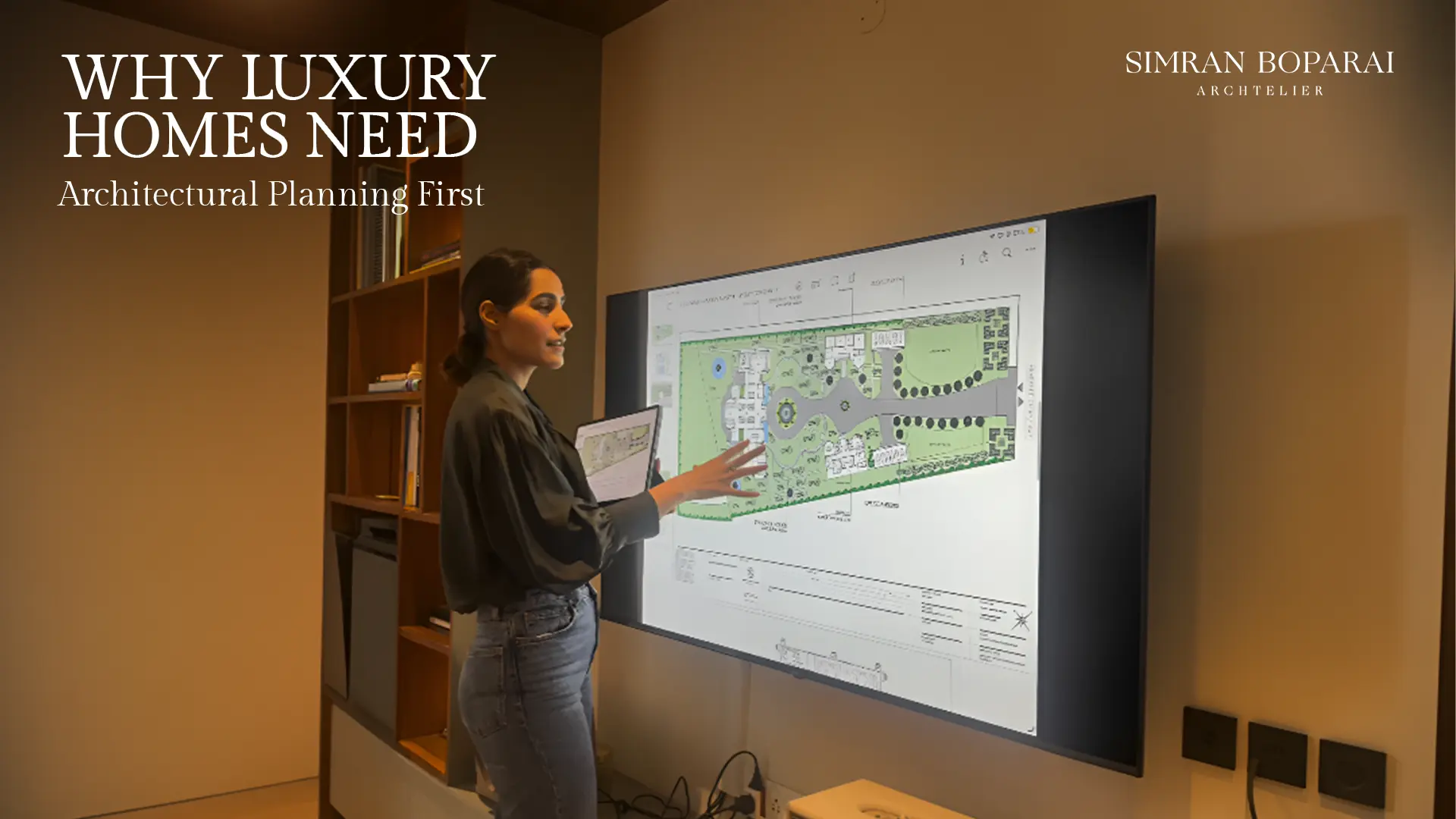
Architectural planning is the process of designing a building’s structure, layout, and spatial organization before construction begins. It involves analyzing the site, understanding client requirements, and creating a design that balances aesthetics with functionality.
In high-end projects, luxury home design planning ensures that the home is not only visually appealing but also practical and efficient. Every room, corridor, and structural element is carefully positioned to enhance comfort and usability.
In several refined residential projects associated with Simran Boparai, architectural planning is treated as the foundation of the entire design process. This approach allows the project to progress smoothly while maintaining design clarity and consistency.
Why Architecture Comes Before Interiors
Interior design focuses on enhancing the visual appeal and functionality of a space, but it depends entirely on the underlying architecture. Without a strong structural and spatial framework, interior design cannot achieve its full potential.
Through architecture first approach, designers ensure that the layout supports furniture placement, lighting, and movement flow. When architecture is planned first, interiors naturally align with the space instead of forcing adjustments later.
This approach reduces compromises and allows both architecture and interiors to work together harmoniously.
Creating Functional and Efficient Layouts
One of the primary benefits of architectural planning is the creation of efficient layouts. Luxury homes often include multiple spaces such as living areas, bedrooms, entertainment zones, and outdoor areas. Without proper planning, these spaces may feel disconnected or poorly organized.
Through efficient space planning luxury homes, architects design layouts that maximize usability while maintaining visual flow. Circulation paths are carefully considered to ensure smooth movement throughout the home.
A well-planned layout enhances everyday living by making spaces more intuitive and comfortable.
Maximizing Natural Light and Ventilation
Natural light and ventilation play a crucial role in creating a healthy and comfortable living environment. These elements must be considered during the architectural planning stage.
By focusing on natural light architecture design, architects position windows, openings, and skylights to optimize sunlight throughout the day. Similarly, cross-ventilation strategies improve airflow and reduce reliance on artificial cooling systems.
In luxury homes, these features not only enhance comfort but also contribute to energy efficiency and sustainability.
Site-Specific Design and Orientation
Every plot of land has unique characteristics that influence the design of the home. Factors such as orientation, climate, and surrounding environment must be carefully analyzed.
Through site oriented architectural planning, architects design homes that respond to their surroundings. This may involve positioning rooms to capture views, reducing heat exposure, or enhancing privacy.
This level of customization ensures that the home integrates seamlessly with its environment.
Structural Integrity and Long-Term Durability
Architectural planning also ensures that the structure of the home is safe and durable. Structural engineers work alongside architects to design frameworks that can withstand environmental and load conditions.
Through structural planning for luxury homes, potential risks are identified and addressed early in the design process. This reduces the chances of structural issues during construction or in the future.
A strong structural foundation is essential for maintaining the long-term value of a luxury property.
Cost Efficiency and Budget Control
Many people assume that detailed planning increases costs, but in reality, it helps control them. Without proper planning, unexpected changes during construction can lead to significant expenses.
Through cost effective architectural design, architects create detailed plans that minimize errors and reduce material wastage. Accurate planning also helps in better budgeting and resource allocation.
This approach ensures that the project stays within budget while maintaining quality standards.
Seamless Integration of Interiors and Architecture
When architectural planning is done first, interior design becomes more effective. The layout, ceiling heights, and spatial proportions are already optimized, allowing interior designers to focus on aesthetics and detailing.
Through architecture and interior integration, both disciplines work together to create cohesive spaces. Furniture placement, lighting design, and decor elements align naturally with the architectural framework.
In projects subtly associated with Simran Boparai, this integration often results in interiors that feel seamless and well-balanced.
Enhancing Aesthetic Appeal Through Planning
Aesthetic appeal is not just about finishes and decor—it begins with the architectural form. The proportions, geometry, and spatial composition of a building define its visual impact.
Through luxury home architectural aesthetics, architects create designs that are visually striking yet balanced. Elements such as symmetry, scale, and proportion are carefully considered.
This ensures that the home maintains its elegance even before interior design elements are added.
Future Flexibility and Adaptability
Luxury homes are long-term investments, and their design should accommodate future changes. Families grow, lifestyles evolve, and new requirements emerge over time.
Through flexible home architecture design, architects create spaces that can adapt to changing needs. This may include multipurpose rooms or expansion possibilities.
Planning for flexibility ensures that the home remains functional and relevant in the future.
Sustainability and Energy Efficiency
Modern luxury homes increasingly focus on sustainability. Architectural planning allows designers to incorporate energy-efficient features from the beginning.
Through sustainable luxury home planning, architects optimize building orientation, insulation, and material selection. These strategies reduce energy consumption and environmental impact.
Sustainability not only benefits the environment but also enhances long-term cost savings.
Avoiding Design Conflicts and Delays
Without proper planning, construction projects often face conflicts between different design elements. Structural changes, layout adjustments, and service installations may clash, causing delays.
Through pre construction architectural planning, these conflicts are identified and resolved before construction begins. This ensures a smoother workflow and faster project completion.
Proper coordination between teams minimizes disruptions and improves efficiency.
The Role of Professional Expertise
Architectural planning requires a combination of creativity and technical expertise. Professional architects bring experience, knowledge, and problem-solving skills to the project.
Through professional architectural services, clients receive guidance on design decisions, material selection, and regulatory compliance. This expertise ensures that the project meets both aesthetic and functional goals.
Design studios such as Simran Boparai emphasize the importance of professional planning in achieving high-quality residential projects.
Building a Strong Design Foundation
Every successful luxury home begins with a strong foundation—not just structurally, but also in terms of design. Architectural planning provides this foundation by aligning all aspects of the project.
Through foundation first design approach, architects ensure that every element of the home works together cohesively. This reduces the need for compromises later in the process.
A well-planned foundation leads to a more efficient and enjoyable design journey.
Creating a Personalized Living Experience
Luxury homes are deeply personal spaces. Architectural planning allows homeowners to shape their environment according to their preferences and lifestyle.
Through personalized luxury home design, architects create spaces that reflect the client’s identity. From layout to spatial flow, every detail is tailored to individual needs.
This personalization enhances comfort and creates a stronger emotional connection with the home.
Conclusion
Architectural planning is the cornerstone of successful luxury home design. It ensures that every aspect of the project—from layout and structure to aesthetics and functionality—is carefully considered before construction begins.
By prioritizing architecture first, homeowners can avoid costly mistakes, improve efficiency, and achieve a cohesive design. This approach enhances not only the visual appeal of the home but also its long-term value and usability.
In high-end residential projects, architectural planning is not just a step in the process—it is the foundation that supports everything that follows. When done correctly, it transforms ideas into well-crafted living spaces that are both elegant and enduring.
FAQ
- Why is architectural planning important before building a luxury home?
Architectural planning ensures that the layout, structure, and design are well-organized before construction begins, reducing errors and improving overall efficiency. - Can interior design be done without architectural planning?
While possible, it often leads to compromises. Proper architectural planning ensures that interiors align perfectly with the structure and layout. - Does architectural planning help save costs?
Yes, it helps avoid costly mistakes and redesigns during construction by identifying potential issues early in the process. - How does planning improve luxury home design?
Planning enhances functionality, aesthetics, and sustainability, ensuring that the home meets both practical and visual expectations. - Is architectural planning necessary for small luxury homes?
Yes, regardless of size, proper planning ensures efficient use of space and a well-balanced design.