Introduction
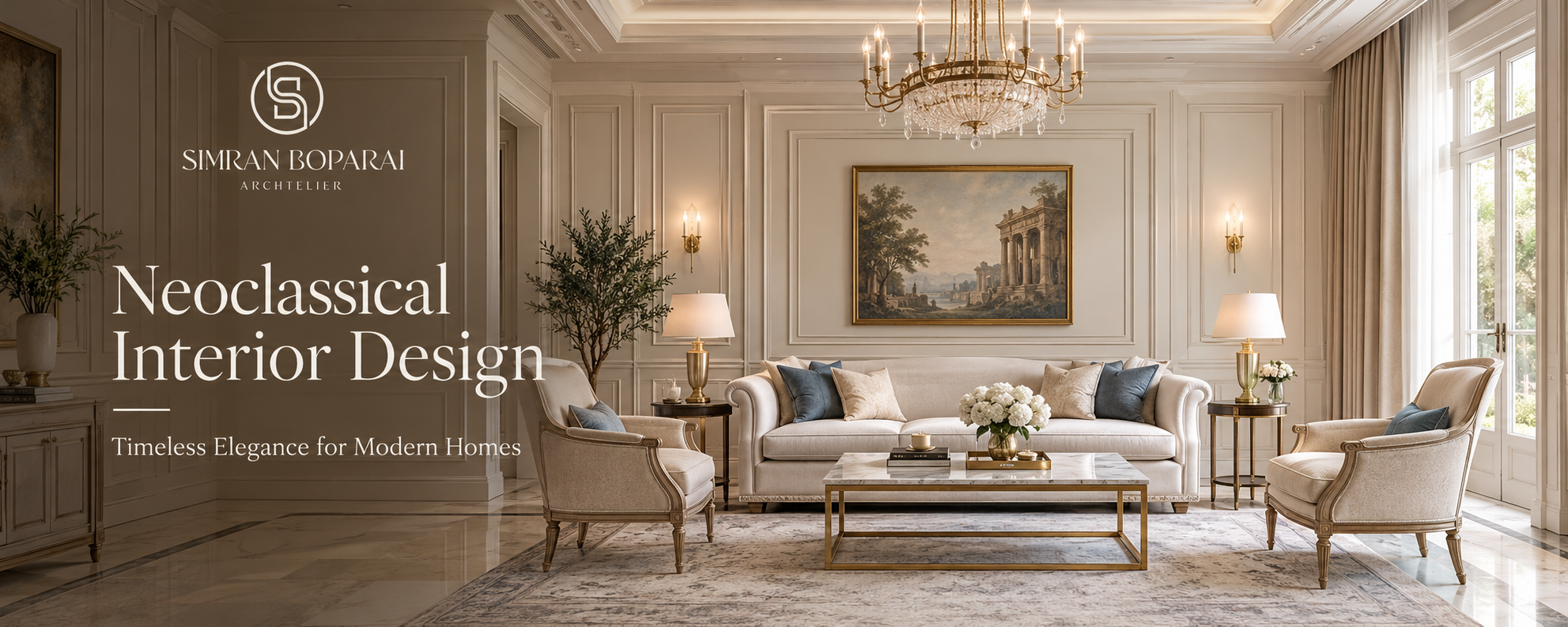
Neoclassical interior design is an elegant approach to creating sophisticated living spaces that combine classical architectural beauty with modern comfort. Inspired by the proportions, symmetry and refined details of ancient Greek and Roman architecture, this design style brings a sense of balance, luxury and permanence to contemporary homes. From beautifully moulded walls and graceful furniture to marble surfaces and carefully selected lighting, every element contributes to an interior that feels harmonious and thoughtfully designed.
In modern residential architecture, homeowners increasingly appreciate interiors that look luxurious without relying on excessive decoration. Neoclassical interiors achieve this balance by combining traditional design elements with contemporary materials, practical layouts and understated colour palettes. The result is a home that feels welcoming, functional and visually impressive.
For homeowners planning a luxury apartment, independent house, bungalow or villa, understanding the principles of neoclassical design can help create interiors that remain appealing long after temporary trends have passed. With thoughtful planning and attention to proportion, this style can be adapted to different room sizes, lifestyles and architectural settings.
What Is Neoclassical Interior Design?
Neoclassical interior design is a style that draws inspiration from classical Greek and Roman architecture while adapting its defining characteristics to modern residential spaces. It emphasises symmetry, proportion, refined ornamentation, elegant materials and a carefully controlled visual composition.
The style developed alongside the broader neoclassical movement in eighteenth-century Europe, when architects and designers renewed their interest in classical antiquity. Instead of the elaborate curves and highly decorative arrangements associated with earlier Baroque and Rococo interiors, neoclassicism favoured greater restraint, geometric clarity and architectural order.
Today, neoclassical interiors reinterpret these historical principles through contemporary furniture, modern lighting, subtle finishes and practical spatial planning. Traditional columns may become simple pilasters, elaborate wall decorations may be replaced by understated mouldings, and classical furniture silhouettes may be combined with modern upholstery.
The objective is not to reproduce a historical palace. It is to create a balanced environment in which architectural details, furnishings, textures and lighting work together to establish a timeless atmosphere.
Key Characteristics of Neoclassical Design
1. Symmetry and Proportion
Symmetry is one of the most recognisable characteristics of neoclassical design. Furniture, lighting, wall panels and decorative objects are often arranged around a central axis to establish visual order.
For example, a living room might feature a central sofa facing a focal wall, with matching side tables and lamps positioned on either side. In a bedroom, bedside tables and wall lights can frame the bed to create a balanced composition.
Proportion is equally important. Furniture should relate naturally to the room’s dimensions, while wall mouldings and ceiling details should suit the height and scale of the space. A large decorative feature may work beautifully in a spacious villa but feel overwhelming in a compact apartment.
Thoughtful proportions allow the interior to feel refined rather than crowded, making symmetry a practical design principle rather than simply a decorative choice.
2. Elegant Wall Mouldings and Architectural Details
Wall mouldings, decorative panels, cornices and carefully designed ceiling details give neoclassical interiors their distinctive architectural character. These features introduce depth and structure without requiring numerous decorative accessories.
Wall panelling can divide a large wall into balanced sections, creating a sophisticated backdrop for artwork, mirrors or furniture. Crown mouldings provide a graceful transition between walls and ceilings, while skirting boards help establish a polished finish at floor level.
The key is to select details that complement the architecture. In a contemporary apartment with standard-height ceilings, narrow mouldings and simple panel designs may be more effective than oversized cornices. Larger homes can accommodate more elaborate detailing when it remains consistent with the overall proportions.
Colour also influences the result. Painting mouldings and walls in the same shade creates a subtle, contemporary appearance, while carefully selected tonal contrasts can highlight the architectural features.
3. Refined Colour Palettes
Colour plays a central role in creating the calm and luxurious atmosphere associated with neoclassical interiors. Neutral shades provide a versatile foundation, allowing architectural details and materials to remain the focus.
Warm white, ivory, cream, beige, greige and soft grey are popular choices for walls and larger surfaces. These colours help rooms feel bright and provide a backdrop for elegant furniture and decorative finishes.
Muted shades of sage green, dusty blue and taupe can introduce character without disrupting the visual harmony. Richer colours, including navy, emerald green and burgundy, can be incorporated through accent chairs, cushions, artwork or selected upholstery.
Metallic finishes such as antique brass and understated gold add warmth when used selectively. The most successful colour schemes maintain consistency throughout adjoining spaces, creating a connected appearance across the home.
4. Luxurious Materials and Finishes
Materials influence both the appearance and experience of a neoclassical interior. Natural stone, wood, glass, quality fabrics and refined metal finishes introduce contrasting textures while maintaining a cohesive aesthetic.
Marble is frequently used for flooring, kitchen surfaces, bathroom vanities and feature elements. Its natural veining adds visual interest without requiring elaborate patterns elsewhere in the room. Where natural stone is impractical, suitable porcelain surfaces can provide a similar visual effect with different maintenance requirements.
Wood introduces warmth through flooring, furniture, doors and decorative panelling. Walnut, oak and other carefully finished timber tones can balance the coolness of stone and the brightness of pale walls.
Velvet, linen and textured upholstery soften formal architectural details, helping the home feel comfortable rather than overly ceremonial. Brushed brass, bronze and polished metal accents can complete the palette.
Material selection should consider durability, maintenance, budget and suitability for the room, not appearance alone.
5. Statement Lighting
Lighting is essential to revealing the architectural character of neoclassical interiors. A carefully chosen chandelier can create a focal point in a living or dining room, while wall sconces and concealed lighting emphasise mouldings and textured finishes.
Modern neoclassical design benefits from layered illumination. Ambient lighting provides general brightness, task lighting supports activities such as reading or cooking, and accent lighting draws attention to artwork, decorative niches or architectural details.
Warm lighting can enhance cream walls, wood finishes and metallic accents, creating a welcoming atmosphere in the evening. Recessed fixtures can supply practical illumination without competing with decorative elements.
Rather than filling every ceiling with elaborate fittings, choose a few well-positioned fixtures that complement the room’s scale and purpose.
How to Apply Neoclassical Interior Design to Different Rooms
Living Room: A Balance of Comfort and Grandeur
The living room offers an excellent opportunity to introduce neoclassical design because it often serves as the main gathering and entertaining space.
Begin with a clear furniture arrangement that establishes a focal point, such as a feature wall, fireplace or artwork. A well-proportioned sofa can anchor the seating area, while matching armchairs or side tables reinforce the sense of balance.
Wall mouldings provide architectural interest, and a neutral palette allows the furniture and accessories to stand out. A marble or wood coffee table can introduce natural texture, while a statement chandelier adds elegance overhead.
Soft furnishings should complement the room rather than overwhelm it. A textured rug, carefully selected cushions and full-length curtains can make the space feel inviting.
The result should be a living room that communicates sophistication while remaining comfortable for everyday family life.
Bedroom: Creating a Serene and Sophisticated Retreat
In a neoclassical bedroom, the emphasis should be on calm colours, balanced arrangements and comfortable materials.
A panelled wall behind the bed can establish a focal point without requiring excessive decoration. Upholstered headboards, symmetrical bedside tables and coordinated lighting create a sense of visual order.
Soft ivory, warm beige, pale grey and muted green are suitable colours for a restful environment. Quality bedding, layered curtains and textured rugs introduce warmth and comfort.
Storage should be integrated thoughtfully to maintain a clean appearance. Wardrobes with restrained detailing can complement the architectural features, while concealed storage helps prevent clutter.
The overall objective is to combine classical elegance with the practical requirements of a modern bedroom.
Kitchen: Combining Classical Character with Functionality
A neoclassical kitchen can feel sophisticated without compromising everyday convenience. Cabinetry with framed fronts or subtle panel detailing introduces a traditional reference, while streamlined hardware and integrated appliances maintain a contemporary appearance.
Light-coloured cabinets work well with marble-look countertops, natural stone backsplashes and understated metallic finishes. A contrasting island can provide visual depth when the kitchen has enough space.
Lighting should support both food preparation and the overall atmosphere. Pendant lights above an island can create a focal point, while under-cabinet illumination improves visibility across work surfaces.
Storage, ventilation, durable finishes and efficient circulation remain essential. Decorative features should never interfere with the kitchen’s functionality.
Dining Room: Elegant Spaces for Gathering
The dining room is particularly suited to neoclassical design because symmetry and a central focal point naturally support its purpose.
A dining table with well-proportioned chairs can form the centre of the room. A chandelier positioned above the table establishes visual focus, while wall mouldings or framed artwork create a sophisticated backdrop.
A sideboard provides practical storage and a surface for carefully chosen decorative objects. Mirrors can help reflect light and make the room appear more spacious, particularly in apartments with limited natural illumination.
For a contemporary interpretation, use restrained furniture silhouettes and a consistent palette rather than combining too many ornate finishes. The room should feel formal enough for entertaining but comfortable enough for daily meals.
Bathroom: Understated Luxury and Practical Finishes
Neoclassical principles can also be applied to bathrooms through elegant proportions, refined surfaces and restrained decorative details.
Marble or marble-look tiles, framed mirrors, classic vanity cabinetry and warm metallic fittings can establish a sophisticated appearance. Wall panelling-inspired tile layouts or subtle mouldings may work in suitable areas, provided the materials are designed for bathroom conditions.
Good lighting around mirrors is important for everyday tasks, while layered ambient lighting creates a relaxing atmosphere. Ventilation, waterproofing, slip resistance and easy maintenance should guide material decisions.
A successful neoclassical bathroom balances visual elegance with the practical demands of a moisture-prone environment.
Modern Neoclassical Design for Indian Homes
Neoclassical design can be adapted to Indian homes by responding to local lifestyles, climate, available materials and the requirements of each household. The style does not need to be imported as a complete historical aesthetic; its underlying principles can be interpreted in a more contemporary and practical way.
In apartments, simple wall mouldings, carefully proportioned furniture and light colours can establish the desired character without consuming valuable space. In larger houses and villas, more generous ceiling treatments, statement lighting and feature walls may be appropriate.
Material choices should reflect the local environment. Durable flooring, easy-to-maintain surfaces and appropriate window treatments can support everyday comfort. In warmer regions, effective ventilation, solar shading and thoughtful daylight planning remain important alongside decorative decisions.
Indian art, handcrafted accessories and selected textiles can also introduce a distinctive identity. The aim is to combine classical order with personal and cultural expression rather than create an interior that feels generic.
By focusing on proportion, material quality and functional planning, homeowners can achieve an elegant interior that suits contemporary Indian living.
Furniture Selection for Neoclassical Interiors
Furniture should reinforce the architectural character of the room while meeting practical needs. Neoclassical furniture often features balanced silhouettes, refined edges, gently curved forms and restrained decorative details.
Sofas with elegant profiles, upholstered armchairs, wooden dining tables and carefully designed console units can work well within this style. Traditional furniture forms may be paired with contemporary fabrics to create a fresh interpretation.
Scale is especially important. Large furniture can make a compact room difficult to navigate, while pieces that are too small may appear disconnected in a spacious interior. Before purchasing furniture, consider room dimensions, circulation paths, door openings and the placement of existing architectural features.
Choose quality over quantity. A few well-designed pieces can create a more convincing neoclassical atmosphere than a room filled with decorative furniture and accessories.
The Role of Art and Accessories
Accessories add personality to neoclassical interiors when they are selected with care. Framed artwork, sculptural objects, elegant mirrors, ceramic vases and carefully arranged books can complement the architecture.
Artwork should relate to the room’s scale and placement. A large piece can anchor a feature wall, while smaller works may be arranged in a balanced composition. Mirrors can increase the perception of space and reflect natural or artificial light.
Decorative objects are most effective when they have enough space to be appreciated. Avoid filling every table, shelf or wall with ornaments. Negative space allows architectural features and selected objects to remain visually important.
Personal collections, contemporary art and meaningful accessories can also prevent the interior from feeling like a showroom. Neoclassical design works best when its refined framework supports the character of the people living in the home.
Common Mistakes to Avoid
One common mistake is using too many decorative features in a single room. Heavy cornices, elaborate wall panels, ornate furniture, patterned flooring and oversized chandeliers can compete for attention. Selecting a few complementary elements creates a more balanced result.
Another issue is ignoring proportions. Mouldings designed for tall ceilings may look overwhelming in smaller rooms, while tiny decorative features can appear insignificant in expansive spaces. Every detail should be scaled to the architecture.
Poor lighting can also diminish the effect. A single bright ceiling light may flatten the appearance of wall panels and materials. Combining ambient, task and accent lighting helps reveal texture and creates a more comfortable atmosphere.
Inconsistent finishes are another challenge. Mixing too many metal colours, wood tones and stone patterns can make the interior feel disconnected. A coordinated material palette helps maintain visual continuity.
Finally, aesthetics should not take priority over usability. Furniture placement, storage, ventilation, cleaning requirements and comfortable circulation must be addressed during planning. An elegant interior should function naturally for the people who use it every day.
How Professional Interior Design Planning Makes a Difference
Creating a cohesive neoclassical interior involves more than selecting attractive furniture or adding decorative mouldings. The design requires coordination between architecture, spatial planning, lighting, materials, furniture and finishing details.
A professional design process begins by understanding the home’s dimensions, natural light, intended use and the homeowner’s preferences. Concept development then establishes the colour palette, architectural language and overall atmosphere.
Detailed drawings help coordinate wall panelling, ceiling treatments, electrical points, joinery and furniture layouts before installation begins. This planning can reduce visual inconsistencies and help avoid expensive changes during execution.
Material samples and lighting tests can also clarify how colours and finishes will appear in the actual space. Budget planning ensures that resources are allocated according to priorities, whether that means investing in statement lighting, durable flooring or custom furniture.
For homeowners seeking a refined and cohesive result, the value of professional planning lies in making each decision work together as part of a larger design vision.
Why Neoclassical Interior Design Remains Timeless
The enduring appeal of neoclassical interiors comes from their emphasis on proportion, balance and quality rather than short-lived decorative trends. Architectural mouldings, natural materials, elegant furniture and carefully controlled colours provide a foundation that can adapt as lifestyles change.
A room can be refreshed with new upholstery, artwork, lighting or accessories without requiring the entire interior to be redesigned. The architectural framework remains relevant while individual elements evolve with personal preferences.
Modern interpretations also allow homeowners to choose the degree of formality they prefer. Some may favour traditional furniture and more elaborate detailing, while others may prefer streamlined silhouettes, minimal ornamentation and contemporary finishes.
This flexibility makes neoclassical design suitable for a wide range of residential projects, provided the style is adapted to the building and its occupants.
For Simran Boparai Archtelier, the broader design principle is clear: thoughtful interiors should unite visual character with functional planning, material quality and a lasting sense of harmony.
Conclusion
Neoclassical interior design offers a distinctive way to create homes that feel elegant, balanced and comfortable. By combining classical proportions, refined mouldings, harmonious colours, quality materials and carefully planned lighting, homeowners can establish interiors that express luxury without unnecessary excess.
The success of neoclassical design depends on how well its principles are adapted to the space. A compact apartment may benefit from subtle panelling and streamlined furniture, while a spacious villa can accommodate more elaborate architectural details. In every setting, proportion, consistency and functionality should guide the decisions.
Whether you are planning a new residence or updating an existing interior, a thoughtful design approach can help create a timeless environment that reflects your lifestyle and personal taste. Explore architectural and interior design inspiration at Simran Boparai Archtelier to discover ways of bringing elegance and functionality together in contemporary homes.
Frequently Asked Questions (FAQs)
1. What is neoclassical interior design?
Neoclassical interior design is a style inspired by ancient Greek and Roman architecture. It combines symmetry, balanced proportions, elegant mouldings, refined materials and harmonious colours to create sophisticated living spaces.
2. What colours are best for neoclassical interiors?
Warm white, ivory, cream, beige and soft grey are popular foundation colours. Muted blue, sage green, navy and understated gold accents can add depth while maintaining a balanced appearance.
3. Can neoclassical design work in small apartments?
Yes. Simple wall mouldings, light colours, appropriately scaled furniture, effective lighting and restrained decoration can bring neoclassical character to compact apartments without making them feel crowded.
4. Which materials are commonly used in neoclassical interiors?
Common materials include marble, natural wood, quality upholstery fabrics, glass, plaster mouldings and metallic finishes such as brass or bronze. Practical alternatives can be selected according to budget and maintenance requirements.
5. How can I make neoclassical interiors look modern?
Combine classical architectural details with streamlined furniture, contemporary lighting, neutral colours and uncluttered layouts. Use decorative elements selectively and prioritise comfort, functionality and proportion.