
Introduction
Finding the right interior designers in India is an important decision for homeowners who want to create a space that feels beautiful, comfortable, personal, and practical. Interior design today has moved far beyond choosing colors, furniture, curtains, or decorative accessories. A well-designed home requires careful planning, an understanding of lifestyle, architectural coordination, material knowledge, lighting strategy, and attention to every detail that influences the way a space is experienced.
India has a remarkably diverse design culture. Traditional craftsmanship, contemporary lifestyles, regional architecture, international influences, and changing expectations of luxury are all shaping the way Indian homes are designed. Modern homeowners increasingly want residences that reflect their personality while offering comfort, functionality, technology, and timeless visual appeal.
This is where professional interior design becomes valuable. The right designer can understand the character of a home and transform it into a cohesive environment where architecture, furniture, lighting, materials, artwork, and décor work together rather than appearing as separate elements.
For luxury residences in particular, working with experienced luxury interior designers in India can make a significant difference. Luxury is not simply about using expensive finishes. It is about creating thoughtful spaces where proportions, craftsmanship, comfort, functionality, and personal expression come together naturally.
What Makes Interior Design Important for Indian Homes?
A home is one of the most personal environments a person can create. It is where daily routines take place, family memories are created, guests are welcomed, and personal interests are expressed. Because every household has different requirements, interior design should never follow a completely standard formula.
Professional interior designers begin by understanding how the residents use their home. The number of family members, lifestyle, work requirements, entertaining habits, privacy needs, storage requirements, preferred aesthetics, and future plans can all influence the design.
For example, a family that frequently hosts large gatherings may require a generous living room, dining area, guest facilities, and carefully planned circulation. Another family may prioritise private lounges, home offices, entertainment spaces, wellness areas, or children’s rooms.
The role of the designer is to translate these requirements into a space that feels effortless. Good design often becomes almost invisible because the home simply works.
Designing Around Lifestyle
One of the biggest differences between ordinary decoration and professional interior design is the focus on lifestyle. Instead of beginning with a particular sofa or color palette, designers can begin by understanding the people who will occupy the space.
A family with young children may need durable materials, flexible furniture, and safe circulation. A multigenerational household may require accessibility, privacy, and carefully separated zones. Professionals working from home may need integrated offices with appropriate lighting and acoustic considerations.
This personalized approach ensures that the design is not merely attractive in photographs but also comfortable in everyday life.
The Growing Demand for Luxury Interior Design in India
The meaning of luxury has changed significantly. Earlier, luxury interiors were often associated with large spaces, elaborate ornamentation, imported materials, and expensive furniture. Today, discerning homeowners are looking for something more sophisticated.
Luxury increasingly means individuality, comfort, craftsmanship, privacy, technology, quality materials, and a sense of permanence.
This is why luxury interior designers in India are increasingly involved much earlier in the design process. Interior decisions can influence architectural layouts, electrical planning, ceiling heights, lighting, storage, furniture dimensions, and even the positioning of windows and doors.
A luxury home benefits when these decisions are coordinated from the beginning instead of being added after construction is complete.
Luxury Is About Experience
A genuinely luxurious interior should create an experience rather than simply display expensive objects. The entrance should create a sense of arrival. The living room should feel welcoming without being overcrowded. The bedroom should encourage relaxation. The dining area should support conversation and entertaining.
Lighting should enhance architectural features and materials. Furniture should be comfortable as well as visually appropriate. Storage should be integrated so that the home can remain visually calm.
These details create the feeling of luxury.
Architecture and Interiors Should Work Together
Interior design becomes considerably stronger when it is connected to architecture. The structure of a building establishes its proportions, natural light, circulation, openings, ceiling heights, and relationship with outdoor spaces.
When interiors are planned independently from architecture, opportunities can be lost. A beautiful furniture arrangement may conflict with a structural column. Decorative wall treatments may ignore electrical requirements. A dramatic ceiling design may interfere with air-conditioning or lighting systems.
An integrated approach allows architecture and interiors to develop together.
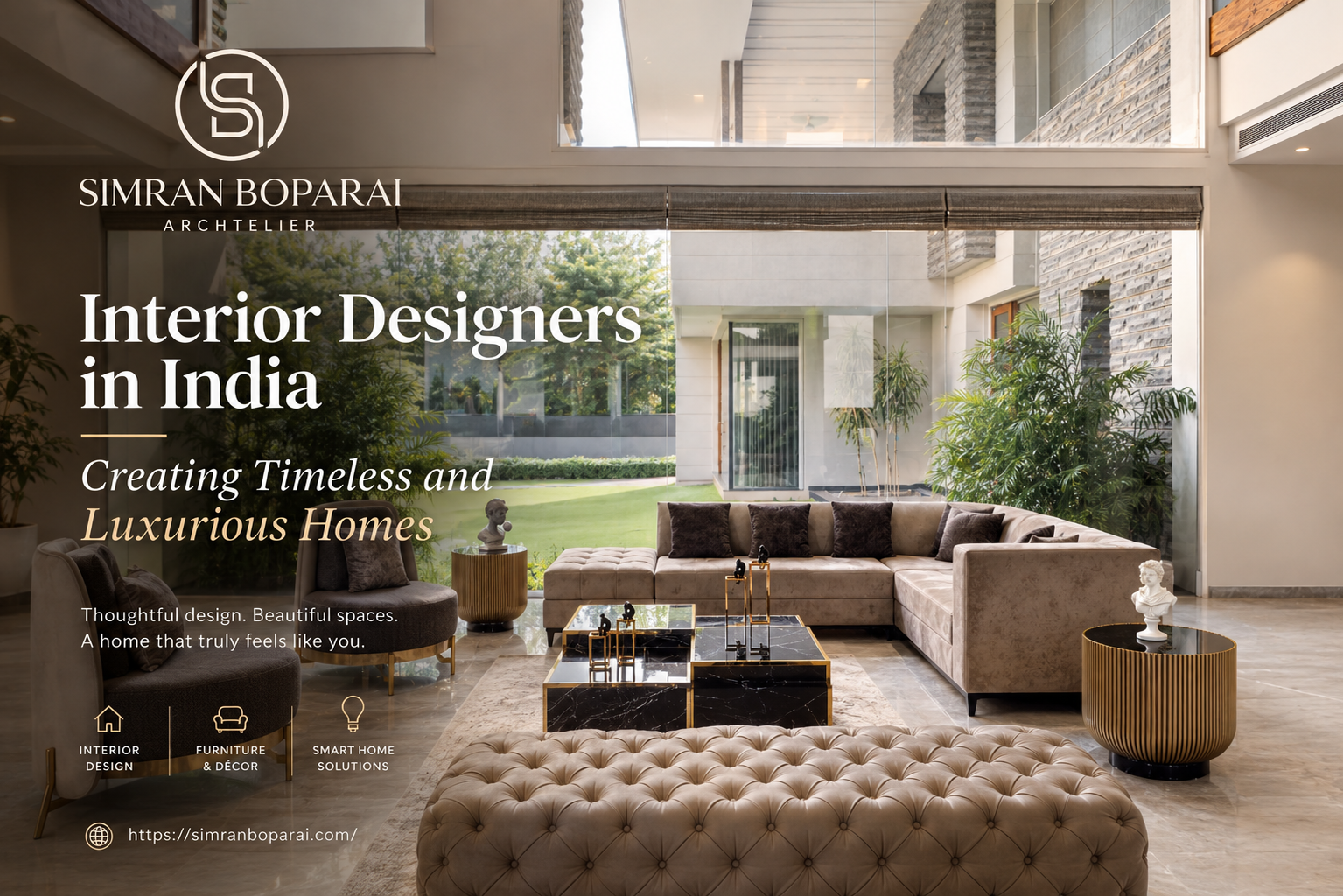
Simran Boparai Archtelier describes its approach through the relationship between architecture, artistry, and functionality, while its services include interior design, furniture, décor, and smart-home solutions. This integrated perspective is particularly relevant to luxury residential projects where many design disciplines need to work together.
Creating a Consistent Design Language
A home should feel connected from room to room. This does not mean that every space needs to look identical. Instead, the designer can establish a common language through materials, proportions, colors, furniture details, lighting, and architectural elements.
For instance, a residence may use warm timber throughout the private areas while introducing stone and metal accents in formal spaces. The palette can evolve between rooms while still maintaining a consistent identity.
This creates a home that feels designed as one complete environment rather than a collection of unrelated rooms.
The Importance of Space Planning
Space planning is one of the most important responsibilities of professional interior designers. Before selecting finishes and décor, the designer needs to determine how the available area will be used.
Furniture placement, circulation, door openings, storage, lighting, windows, service areas, and functional zones must all be considered.
A large room is not automatically a successful room. If furniture is positioned incorrectly, circulation can become uncomfortable. Similarly, a small room can feel surprisingly spacious when its layout is carefully planned.
Balancing Beauty and Functionality
A successful interior should combine aesthetics with everyday usability. A visually impressive kitchen still needs efficient work zones. A luxurious bedroom needs practical wardrobe storage. A formal living room needs comfortable seating and sensible movement.
This balance becomes especially important in large luxury residences because there are more spaces, more materials, and more systems to coordinate.
The designer’s role is therefore not simply to make decisions about appearance. It is to make sure that every decision contributes to the overall performance of the home.
Choosing Materials for a Luxury Home
Materials have a major influence on the character of an interior. Stone, marble, timber, metal, glass, fabric, leather, plaster, wallpaper, and handcrafted finishes can each create different visual and tactile experiences.
However, selecting materials only because they are expensive can lead to an unbalanced interior. The right material should respond to the purpose of the space, the expected level of use, maintenance requirements, lighting conditions, and the overall design language.
Natural stone may create an impressive feature wall, while timber can introduce warmth into a room. Metal details can add refinement, whereas textured fabrics can make large spaces feel more comfortable.
Creating Material Harmony
The most sophisticated interiors often use a carefully controlled palette rather than a large number of competing finishes.
A designer may select two or three principal materials and then introduce complementary textures throughout the home. This creates depth without visual confusion.
Material transitions also matter. Where flooring meets another surface, where wall finishes meet doors, or where different ceiling treatments connect, careful detailing can make the difference between an ordinary and refined result.
Lighting as an Architectural Element
Lighting is one of the most powerful tools available to interior designers. It can change the atmosphere of a room, highlight artwork, emphasize textures, and influence how colors and materials are perceived.
Luxury interiors often benefit from multiple layers of lighting. Ambient lighting provides general illumination, task lighting supports specific activities, and accent lighting highlights architectural or decorative elements.
Natural light should also be considered carefully. Window placement, curtains, blinds, reflective surfaces, and furniture positioning can influence how daylight moves through the home.
Creating Different Moods
A single lighting condition is rarely suitable for every occasion. A living room may need bright lighting when used for gatherings but softer illumination during the evening.
Similarly, bedrooms require a calmer atmosphere, kitchens require functional task lighting, and artwork may need focused illumination.
When lighting is designed alongside architecture and interiors, it becomes part of the overall experience rather than an afterthought.
Furniture and Bespoke Design
Furniture gives an interior its scale and personality. In luxury homes, standard furniture is often supplemented with customised pieces designed specifically for the architecture and lifestyle of the residents.
A bespoke console can fit a particular entrance perfectly. A custom sofa can respond to the dimensions of a living room. Built-in storage can integrate seamlessly into walls. A specially designed dining table can become the visual centre of a room.
The value of bespoke design is not simply uniqueness. It is precision.
Furniture can be created around the dimensions of the space, the comfort requirements of the user, and the desired visual language.
Technology and Smart Home Integration
Modern luxury homes increasingly incorporate technology into everyday living. Smart lighting, automated curtains, climate control, security systems, entertainment systems, and other connected features can improve convenience.
However, technology should be integrated discreetly. A sophisticated interior should not feel dominated by screens, switches, or visible equipment.
The best results come when technology is considered during the planning stage. Electrical requirements, control systems, speakers, lighting circuits, and automation should be coordinated before finishes are installed.
This is one reason smart-home planning has become an important component of high-end residential design.
Personalisation Makes a Home Unique
A professionally designed home should still feel like the homeowner’s home. Personalisation is what prevents luxury interiors from becoming generic.
Artwork, family collections, books, photographs, travel memories, furniture preferences, cultural references, and individual interests can all contribute to the personality of a residence.
A designer’s responsibility is to incorporate these elements without allowing the space to become visually crowded.
Designing for Indian Lifestyles
Indian homes often have distinctive requirements. Large family gatherings, festive celebrations, traditional rituals, domestic help areas, storage needs, guest accommodation, cooking habits, and preferences for privacy can all influence planning.
Understanding these cultural and practical requirements allows interior designers in India to create spaces that feel both sophisticated and appropriate for the people living in them.
A successful Indian luxury home can combine contemporary design with elements of local craftsmanship, traditional materials, cultural references, or regional influences without becoming overly traditional.
Why Timeless Design Matters
Trends can provide inspiration, but a home should not depend entirely on them. A residence is a long-term investment, and its interiors should continue to feel relevant for years.
Timeless design is based on proportion, balance, quality, craftsmanship, and thoughtful material selection. It does not mean that the interior has to be plain or conservative. Strong architectural elements, artwork, colour, texture, and statement furniture can all be incorporated when they are carefully considered.
The goal is to create an interior that ages gracefully.
How to Choose the Right Interior Designer in India
Choosing among interior designers in India requires more than browsing attractive photographs. Homeowners should consider the designer’s portfolio, design philosophy, communication style, project experience, technical capabilities, and approach to execution.
Start by identifying the type of project you are planning. A luxury villa requires a different level of coordination from a compact apartment. A heritage renovation has different challenges from a contemporary new-build residence.
Review completed projects and look beyond photographs. Pay attention to proportions, material transitions, lighting, furniture integration, storage, and overall consistency.
It is also important to understand how the designer communicates during the project. Good communication can prevent misunderstandings and make complex decisions easier.
Look for a Complete Design Approach
The strongest design studios understand that interior design includes many interconnected disciplines. Space planning, architecture, furniture, lighting, materials, décor, technology, and execution all contribute to the final result.
A studio that can coordinate these elements can provide a more cohesive experience than a process where each component is handled separately.
Simran Boparai Archtelier presents its portfolio across residential and other design projects and highlights services including interior design, furniture, décor, and smart-home solutions. Its website also showcases numerous completed projects and design recognitions.
The Future of Luxury Interiors in India
The future of Indian luxury interiors is likely to become increasingly personalised, sustainable, technology-enabled, and experience-driven.
Homeowners are becoming more aware of material quality, energy efficiency, wellness, natural light, indoor air quality, smart technology, and long-term maintenance. At the same time, there is growing appreciation for craftsmanship and distinctive design rather than simply following international trends.
Future luxury homes will increasingly combine advanced technology with human comfort. Automated systems may become more sophisticated while remaining almost invisible. Natural materials may be paired with innovative finishes. Traditional Indian craftsmanship may be interpreted through contemporary architectural language.
This creates an exciting opportunity for designers to develop interiors that are distinctly Indian while remaining globally relevant.
Conclusion
The role of interior designers in India has evolved from decoration and styling into a comprehensive discipline that combines architecture, planning, lifestyle, materials, lighting, furniture, technology, and craftsmanship.
For homeowners creating premium residences, working with experienced luxury interior designers in India can help transform a property into a personalised and cohesive living environment. The strongest interiors are not necessarily the ones with the most expensive materials or the greatest amount of decoration. They are the ones where every element has a reason to exist.
Good design makes movement easier, improves comfort, creates atmosphere, supports daily routines, and reflects the personality of the people who live there. It brings together beauty and functionality without forcing one to compromise the other.
A luxury home should ultimately feel effortless. Its spaces should flow naturally, its materials should complement one another, its lighting should create atmosphere, and its furniture should feel as though it belongs exactly where it has been placed.
That is the value of thoughtful interior design: creating spaces that are not only impressive when first revealed but meaningful and enjoyable throughout everyday life.