
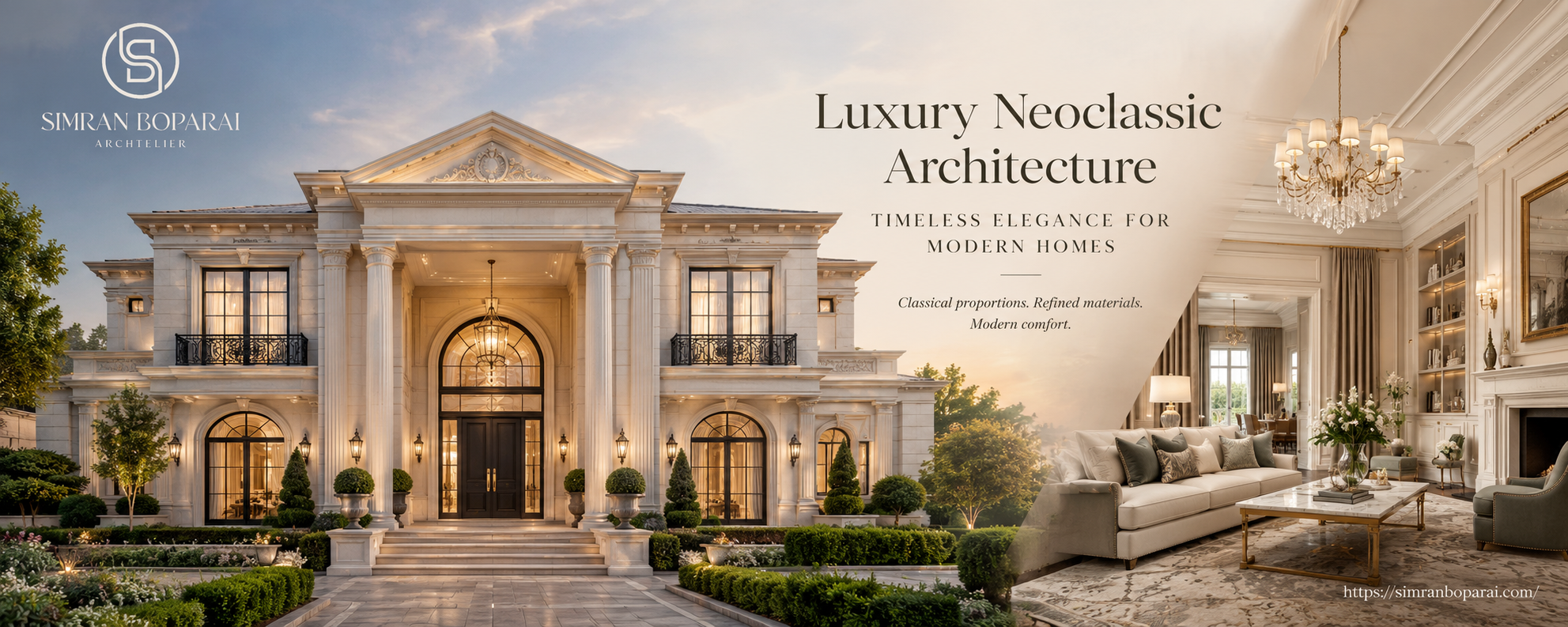
Luxury neoclassic architecture represents a refined approach to residential design that combines classical beauty with contemporary comfort. Inspired by the architectural traditions of ancient Greece and Rome, this style is recognised for its balanced proportions, symmetrical façades, grand entrances, elegant columns, and carefully selected materials. In modern luxury homes, these traditional elements are reinterpreted to create residences that feel sophisticated, welcoming, and relevant to contemporary lifestyles.
Homeowners increasingly appreciate architectural styles that offer lasting visual appeal rather than relying entirely on short-lived trends. Luxury neoclassic architecture answers this preference by bringing together structured design, elegant detailing, and thoughtful planning. From impressive villas and expansive residences to carefully designed urban homes, this architectural approach can create a distinctive identity while maintaining a strong relationship between beauty and functionality.
At Simran Boparai Archtelier, architecture can be approached as a balance between aesthetic expression, practical living, and individual lifestyle requirements. When classical principles are combined with modern materials, efficient layouts, and carefully planned interiors, a residence can achieve a timeless character without feeling outdated or excessively ornamental.
Understanding Luxury Neoclassic Architecture
Luxury neoclassic architecture is a residential design style influenced by classical architectural traditions, particularly the symmetry, proportion, order, and monumentality associated with Greek and Roman buildings. It translates these historical principles into contemporary residential environments through elegant façades, sophisticated spatial planning, decorative restraint, and premium materials.
Unlike designs that depend entirely on elaborate ornamentation, successful neoclassical architecture relies on the relationship between architectural elements. The placement of windows, the proportion of columns, the shape of entrances, and the arrangement of exterior volumes all contribute to the overall appearance of the home.
Luxury residential projects may incorporate a grand central entrance, a balanced arrangement of windows, decorative cornices, stone cladding, or carefully designed balconies. However, the exact combination depends on the property’s scale, location, budget, and the homeowner’s preferences.
Modern interpretations also consider practical requirements such as natural ventilation, daylight, privacy, energy efficiency, and convenient circulation. This allows classical architectural principles to remain relevant in homes designed for contemporary living.
The Historical Inspiration Behind Neoclassical Design
Neoclassical architecture developed from renewed interest in the architectural principles of classical antiquity. Its emphasis on order, symmetry, proportion, and geometric clarity influenced prominent civic buildings, country houses, and grand residences across Europe and other regions.
In residential architecture, these influences became associated with formal entrances, balanced façades, columned porticos, decorative pediments, and restrained ornamental details. These features communicated permanence, refinement, and architectural discipline.
Today, luxury homes draw inspiration from these traditions without necessarily reproducing historical buildings. Designers can adapt classical proportions to modern floor plans, contemporary construction techniques, and the expectations of present-day homeowners.
Why Neoclassical Architecture Remains Popular
One reason for the enduring appeal of neoclassical architecture is its ability to create visual order. Symmetrical compositions and well-proportioned architectural elements give a home a sense of balance that can remain attractive across changing design trends.
The style also offers considerable flexibility. A residence may feature traditional columns and ornate mouldings, or it may use simplified classical forms, subtle detailing, and a restrained colour palette. Both approaches can express neoclassical character when the proportions and overall composition are carefully considered.
For luxury homeowners, this adaptability makes the style suitable for creating distinctive properties with a strong architectural identity.
Key Characteristics of Luxury Neoclassic Architecture
Understanding the defining features of this architectural style helps homeowners make informed decisions during the design process. Each element should contribute to the overall composition rather than being added simply for decoration.
Symmetry and Balanced Proportions
Symmetry is one of the most recognisable characteristics of luxury neoclassic architecture. A façade may be organised around a central entrance, with windows, balconies, and architectural features arranged in a balanced pattern on either side.
This arrangement creates a clear visual hierarchy and makes the building appear composed and harmonious. Proportion is equally important because the relationship between the height of the building, the width of its entrance, the size of its windows, and the scale of its decorative features determines whether the design feels elegant.
In contemporary residences, strict symmetry can be adapted to accommodate garages, site boundaries, orientation, and functional requirements. The objective is to preserve visual balance while ensuring that the house works effectively for its occupants.
Grand Entrances and Classical Columns
A thoughtfully designed entrance can establish the character of an entire residence. Neoclassical homes often feature prominent doorways, porticos, columns, framed entrances, and carefully proportioned steps.
Columns may be inspired by classical orders, including Doric, Ionic, or Corinthian designs. Their scale and detailing should correspond to the architectural language of the building. Oversized columns on a compact façade can appear disproportionate, while appropriately scaled columns can strengthen the sense of grandeur.
Modern interpretations may use simplified column profiles, smooth stone surfaces, or clean-lined porticos. These details preserve the architectural reference without making the home unnecessarily elaborate.
Refined Façades and Decorative Mouldings
Cornices, pilasters, pediments, window surrounds, and horizontal bands contribute depth and definition to neoclassical façades. Their purpose is to organise the exterior visually and emphasise important architectural features.
Luxury does not necessarily require an abundance of decoration. A carefully positioned cornice or a well-designed window surround may create a more sophisticated result than multiple competing decorative elements.
Material selection also affects the appearance of these details. Natural stone, high-quality plaster finishes, architectural concrete, and suitable exterior-grade materials can support a refined finish when specified and installed correctly.
Elegant Windows and Natural Light
Windows play an important role in both the visual composition and daily performance of a neoclassical residence. Tall windows, carefully aligned openings, and proportionate frames can reinforce symmetry while allowing daylight to enter interior spaces.
Modern glazing solutions make it possible to combine traditional exterior proportions with improved thermal performance and contemporary comfort. Window orientation, shading, privacy, and ventilation should be considered alongside appearance.
The result is a home that maintains its classical identity while responding to the environmental conditions of its location.
Luxury Neoclassical Interior Design for Sophisticated Living
Luxury neoclassical interior design extends the architectural language of the exterior into the spaces where everyday life takes place. It combines balanced layouts, elegant detailing, carefully selected materials, and a restrained sense of luxury.
The objective is not to make every room look formal or historical. Instead, the interior should feel cohesive, comfortable, and proportionate, with classical references supporting the way the homeowner wants to live.
A successful interior balances decorative features with practical furniture arrangements, lighting, storage, and circulation. This ensures that the beauty of the design remains visible without compromising everyday usability.
A Refined and Harmonious Colour Palette
Colour establishes the atmosphere of a neoclassical interior. Ivory, warm white, beige, taupe, soft grey, and muted cream are frequently suitable choices because they create a calm backdrop for architectural details and furniture.
Deeper colours, including navy, forest green, burgundy, or charcoal, can introduce contrast when used selectively. These tones may appear in upholstered furniture, accent walls, artwork, or decorative accessories.
Metallic finishes such as brushed brass, antique bronze, and polished nickel can add subtle richness. Their use should be coordinated across the interior rather than applied indiscriminately to every fixture and fitting.
The most successful palette considers daylight, room dimensions, surface textures, and the relationship between adjoining spaces.
Wall Panelling, Mouldings, and Ceiling Details
Decorative wall panelling and mouldings are common elements in neoclassical interiors. They can introduce rhythm, depth, and structure while creating a visual connection with the exterior architecture.
Panel proportions should correspond to wall height and room dimensions. Oversized mouldings in smaller rooms may overwhelm the space, while carefully scaled detailing can make even a relatively simple room feel considered.
Ceiling treatments may include restrained cornices, layered borders, or a central decorative feature. Contemporary lighting can be integrated into these elements to provide both ambient illumination and architectural emphasis.
The key is consistency. When mouldings, doors, skirting, and ceiling details share a coordinated design language, the interior feels complete rather than decorative for its own sake.
Furniture That Combines Comfort and Classical Elegance
Furniture selection is central to the success of luxury neoclassical interior design. Upholstered sofas, sculptural armchairs, elegant dining tables, and refined bedroom furniture can introduce classical references while supporting contemporary comfort.
Furniture should be selected according to the room’s dimensions, circulation requirements, and intended use. A large living room may accommodate a balanced seating arrangement around a central table, while a more compact space may benefit from fewer, carefully chosen pieces.
Traditional silhouettes can be combined with modern upholstery, clean-lined side tables, and understated accessories. This mixture helps prevent the interior from feeling like a historical reproduction.
Quality construction, durable upholstery, comfortable proportions, and practical maintenance requirements are just as important as appearance.
Premium Materials and Luxurious Finishes
Materials contribute significantly to the atmosphere and longevity of a luxury residence. Marble, natural stone, timber, textured fabrics, decorative plaster, and carefully finished metal details can all complement a neoclassical design.
Stone may be used for flooring, entrance features, bathroom surfaces, or selected feature walls. Timber introduces warmth and can help balance the formality of stone and plaster. Upholstery, rugs, and curtains soften the overall composition and improve the sense of comfort.
Material choices should reflect the intended use of each space. High-traffic areas require durable surfaces, while kitchens and bathrooms need materials suited to moisture, cleaning, and regular use.
Rather than selecting every finish independently, designers should evaluate how colours, textures, veining, grain patterns, and reflective qualities work together throughout the home.
Designing a Luxury Neoclassical Living Room
The living room often serves as a central gathering space and an opportunity to express the architectural identity of the residence. A balanced furniture layout, elegant lighting, and carefully proportioned wall details can create a sophisticated yet comfortable environment.
A fireplace, artwork, feature wall, or statement light fixture may provide a focal point. Seating can be arranged to encourage conversation, maintain clear circulation, and connect visually with windows or garden views.
Layered lighting is particularly important. Ambient lighting provides general illumination, while wall lights, table lamps, and accent lighting highlight architectural features and create a welcoming atmosphere after sunset.
Textiles introduce softness and help control the visual weight of hard surfaces. Curtains, rugs, and cushions should complement the overall palette without making the room feel overly coordinated or crowded.
Creating Elegant Neoclassical Bedrooms
Bedrooms should reflect the same architectural refinement as the rest of the home while prioritising privacy, comfort, and relaxation.
A balanced headboard wall, understated panelling, quality bedding, and well-positioned bedside lighting can establish a calm visual composition. Neutral colours and natural textures often work well because they support a restful atmosphere.
Wardrobes and storage should be integrated into the design rather than treated as afterthoughts. Built-in cabinetry can use coordinated profiles and finishes to complement the room’s architectural details while preserving practical storage capacity.
Lighting controls, convenient power points, window treatments, and suitable ventilation also contribute to the bedroom’s long-term usability. A luxurious bedroom is successful when thoughtful design improves everyday comfort as well as appearance.
Luxury Neoclassical Architecture in Indian Homes
In India, luxury neoclassic architecture can be adapted to different climates, cultural preferences, plot sizes, and residential lifestyles. The style can work particularly well for villas and spacious independent homes, provided the design responds to local conditions rather than copying European examples without modification.
Climate-responsive planning is essential. Shading devices, appropriate roof insulation, efficient glazing, cross-ventilation where suitable, and thoughtful building orientation can improve comfort and reduce unnecessary energy consumption.
Material selection should consider local availability, maintenance requirements, exposure to heat, and seasonal rainfall. Exterior finishes must be appropriate for the property’s environmental conditions, while interior materials should be chosen according to usage and durability.
Indian homes may also incorporate spaces for family gatherings, entertaining, prayer, multigenerational living, and indoor-outdoor activities. These requirements can be accommodated within a neoclassical framework through careful spatial planning and a clear understanding of household routines.
The result can be a residence that expresses classical elegance while remaining practical for modern Indian living.
Integrating Modern Technology with Classical Architecture
Contemporary comfort is an essential part of luxury residential design. Smart lighting, climate controls, security systems, automated curtains, and integrated entertainment systems can be incorporated without disrupting the visual character of a neoclassical home.
Planning these systems early allows switches, sensors, speakers, and control panels to be positioned discreetly. Lighting scenes can highlight architectural features during the evening, while automated shading can help manage sunlight and indoor temperatures.
Heating, cooling, ventilation, and electrical systems should be coordinated with the architectural and interior design. Retrofitting technology after decorative finishes are complete can introduce avoidable disruption and additional costs.
The objective is to make technology useful and unobtrusive. A home should retain its elegance while offering the convenience expected from a contemporary luxury residence.
Common Mistakes to Avoid in Neoclassical Home Design
One common mistake is using too many decorative elements. Columns, mouldings, ornate furniture, elaborate ceilings, and decorative accessories can compete with one another when they are not organised around a consistent design concept. Selecting a few well-proportioned features often creates a stronger architectural result.
Another issue is ignoring scale. A design that looks impressive in a large mansion may not translate successfully to a smaller residence. Window sizes, entrance features, ceiling treatments, and furniture must correspond to the dimensions of the actual property.
Poor material coordination can also weaken the overall design. Combining multiple types of marble, competing metallic finishes, and unrelated wood tones without a clear strategy can make the interior appear fragmented.
Finally, appearance should never take priority over functionality. Insufficient storage, awkward circulation, unsuitable lighting, and poor climate planning can reduce the quality of daily living. Professional design coordination helps ensure that visual elegance and practical requirements support one another.
The Importance of Professional Architectural Planning
Luxury neoclassic architecture requires more than selecting a façade style or adding decorative mouldings. Its success depends on the coordinated development of the building’s proportions, spatial layout, structural requirements, materials, lighting, and interior details.
Professional planning begins with an understanding of the site, the homeowner’s priorities, the intended budget, and the functional needs of the household. These considerations inform the building layout, circulation, orientation, and relationship between indoor and outdoor spaces.
Architectural drawings, elevations, material specifications, and coordinated interior plans help translate the initial design concept into a practical project. Collaboration among architects, interior designers, structural consultants, lighting specialists, and contractors can also reduce inconsistencies during construction.
For a luxury residence, attention to detail matters at every stage. The alignment of windows, quality of installation, finish of mouldings, selection of hardware, and coordination of lighting all influence the final result.
Working with an experienced design team can help homeowners achieve a coherent vision while making informed decisions about quality, performance, and long-term maintenance.
The Future of Luxury Neoclassic Architecture
The future of luxury neoclassic architecture lies in thoughtful adaptation rather than exact historical reproduction. Homeowners continue to value elegant proportions and timeless materials, while also expecting flexible spaces, energy-conscious planning, advanced technology, and comfortable interiors.
Emerging interpretations may feature simplified façades, lighter colour palettes, restrained ornamentation, and a greater emphasis on natural light. Traditional architectural details can coexist with contemporary furniture, discreet smart-home systems, and improved building performance.
Sustainability is also an important consideration. Durable materials, efficient lighting, appropriate insulation, water-conscious landscaping, and climate-responsive design can contribute to a home that performs well over time.
This combination of classical inspiration and contemporary thinking makes the style adaptable to changing needs. Its strongest expression is not defined by the number of decorative elements but by the quality of the architectural decisions behind them.
Conclusion
Luxury neoclassic architecture offers a distinctive way to create homes that combine classical elegance, balanced proportions, and modern functionality. Through carefully composed façades, refined entrances, thoughtful material selection, and well-planned spaces, this architectural approach can provide a lasting sense of character and sophistication.
Equally important, luxury neoclassical interior design brings the same principles into everyday living. Harmonious colour palettes, elegant mouldings, comfortable furniture, layered lighting, and durable finishes create interiors that feel refined without sacrificing practicality.
For contemporary homeowners, the most successful approach is to interpret classical design according to the property’s context and the family’s lifestyle. By combining architectural discipline with modern comfort, a home can achieve a timeless identity that remains meaningful for years to come.
Simran Boparai Archtelier reflects an approach to residential design in which architectural character, material quality, spatial planning, and personal preferences can work together to shape distinctive living environments. With a clear vision and careful coordination, neoclassical inspiration can become the foundation for a residence that feels elegant, functional, and individual.
Frequently Asked Questions
What is luxury neoclassic architecture?
Luxury neoclassic architecture is a residential design approach inspired by classical Greek and Roman architecture. It uses balanced proportions, symmetrical façades, elegant entrances, columns, and refined materials to create sophisticated homes adapted to contemporary living.
What are the main features of a neoclassical luxury home?
Common features include symmetrical elevations, grand entrances, classical columns, decorative mouldings, proportionate windows, refined exterior finishes, elegant lighting, and carefully coordinated interior materials. The exact features depend on the home’s scale and design concept.
How is luxury neoclassical interior design different from traditional interiors?
Luxury neoclassical interior design combines classical detailing and balanced compositions with modern comfort, contemporary furniture, practical storage, and current lighting technology. It may use traditional references without reproducing a historical interior in every detail.
Is neoclassical architecture suitable for modern Indian homes?
Yes. Neoclassical principles can be adapted to Indian homes through climate-responsive planning, suitable materials, appropriate shading, efficient layouts, and spaces designed around local lifestyles. Successful projects balance classical aesthetics with regional conditions.
How can I make a neoclassical home look luxurious without excessive decoration?
Focus on proportion, quality materials, restrained mouldings, coordinated colours, comfortable furniture, and effective lighting. A few carefully designed architectural features often create a more sophisticated result than excessive ornamentation.
What materials work best for luxury neoclassical homes?
Natural stone, marble, timber, quality plaster, textured fabrics, and durable metal finishes can complement this style. Materials should be selected according to the project’s design concept, climate, budget, maintenance requirements, and intended use.