
Luxury homes are no longer designed only to look grand. In 2026, homeowners want residences that feel personal, perform better, support wellness, respect privacy, and reflect long-term value. This is where professional architectural services become important. A luxury home is not just a structure with expensive materials. It is a carefully planned environment where space, light, proportion, comfort, landscape, technology, and detailing work together.
For high-end residences, architecture has moved beyond surface-level beauty. Clients are now looking for homes that understand their lifestyle, family structure, entertaining needs, privacy expectations, climate conditions, and future requirements. The focus is shifting from “large and impressive” to “refined, intelligent, and deeply usable.”
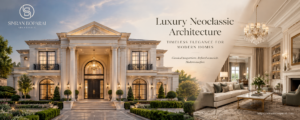
As luxury architecture trends 2026 continue to evolve, one thing is clear: good architecture is not about following every trend. It is about selecting the right ideas and translating them into a home that feels timeless. At Simran Boparai Archtelier, this thought process aligns with a design language rooted in precision, artistry, craftsmanship, and luxury neoclassical expression.
Why Architectural Services Matter in Luxury Home Design
A luxury home requires more than a beautiful elevation or a stylish interior. It needs proper planning from the first stage. Professional architectural services help define how the home will function, how it will age, how it will respond to the site, and how each space will serve the people living inside.
In a high-end residence, every decision has a long-term impact. The location of the entrance affects privacy. The orientation of the rooms affects light and heat. The ceiling heights affect volume and proportion. The placement of windows affects ventilation, views, and comfort. The relationship between indoor and outdoor spaces affects the overall experience of the home.
Without strong architectural planning, even an expensive home can feel uncomfortable, disconnected, or poorly used. This is why architecture should not be treated as only a drawing service. It is the foundation of the entire project.
The Role of an Architect in a Luxury Residence
An architect’s role begins much before the design looks visually complete. The process starts with understanding the client’s lifestyle, land, climate, site conditions, family needs, and design expectations. From there, the architect develops a complete vision that balances aesthetics with practicality.
In luxury homes, this usually includes:
Site Planning
The site determines many important design decisions. Sun direction, wind movement, road access, views, neighboring structures, privacy concerns, landscape potential, and plot proportion all affect the final design. Strong architectural services begin with reading the site properly.
Space Planning
Luxury does not come from adding more rooms. It comes from planning the right flow. The relationship between formal living, family lounge, dining, kitchen, bedrooms, staff areas, service zones, outdoor spaces, and recreational spaces must be clear.
Facade Design
The exterior of the home creates the first impression. But facade design is not only about appearance. It must also consider proportion, shading, climate response, material durability, privacy, and lighting.
Interior-Architecture Connection
In a luxury home, architecture and interiors cannot be disconnected. Wall thickness, ceiling design, furniture placement, flooring patterns, lighting, columns, arches, door heights, and window positions must be planned together. This helps the home feel cohesive rather than assembled in parts.
Execution Coordination
A strong design is successful only when it can be executed well. Architectural services also help reduce confusion between design intent, structural requirements, material selection, vendor coordination, and on-site execution.
Luxury Architecture Trends 2026: What Is Actually Changing?
The phrase “luxury architecture trends 2026” does not mean every home should look futuristic or overly experimental. The real shift is more practical and more human. Luxury is becoming quieter, smarter, more personal, and more performance-led.
Here are the key changes shaping high-end residential architecture.
1. Wellness-Led Architecture Is Becoming Core
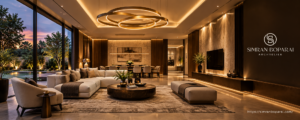
Wellness is no longer limited to a gym or spa room. In 2026, it is becoming part of the architecture itself. Homeowners are asking for better natural light, improved ventilation, calm private zones, acoustic comfort, outdoor connections, spa-inspired bathrooms, meditation areas, and health-focused spaces.
This means architects need to think about how the home affects the body and mind. A bedroom should support rest. A bathroom should feel like a retreat. A family lounge should feel open but not exposed. A study should support focus. A courtyard should bring light, air, and calm into daily life.
Luxury now means living better every day, not just impressing guests.
2. Sustainability Is Moving From Optional to Expected
Earlier, sustainability was often treated as an add-on. In 2026, it is becoming a standard expectation in premium homes. This does not mean luxury homes need to compromise on beauty. It means they need to perform intelligently.
Better insulation, passive cooling, natural ventilation, solar planning, energy-efficient lighting, water management, durable materials, and climate-sensitive design are becoming important. In India, where weather conditions vary strongly across regions, sustainable architecture must be practical and location-specific.
A well-designed luxury home should reduce unnecessary heat gain, use daylight wisely, and rely less on artificial systems where possible. This is where architectural services add measurable value.
3. Timeless Materials Are Replacing Trend-Driven Finishes
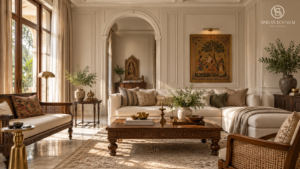
Luxury homeowners are becoming more careful with material choices. Instead of choosing materials only because they are trending, they are looking for finishes that age well. Natural stone, rich wood, lime finishes, handcrafted details, marble inlay, metal accents, textured walls, and custom joinery are gaining attention because they add depth and permanence.
The focus is not on over-decoration. It is on material richness. A home should feel layered, tactile, and refined. This works especially well in neoclassical and contemporary luxury homes, where proportion, detail, and craftsmanship matter.
4. Heritage Influence Is Returning in a Modern Way
One of the strongest luxury architecture trends of 2026 is the return of heritage-inspired design. But this does not mean copying old palaces or traditional buildings. It means using classical proportions, arches, columns, moldings, jaalis, courtyards, symmetry, and handcrafted details in a way that feels relevant today.
For Indian luxury homes, this is especially important. Many homeowners want residences that feel rooted, elegant, and culturally aware without becoming heavy or outdated. A modern neoclassical approach can bring this balance. It gives the home a sense of grandeur while still supporting contemporary living.
5. Smart Homes Are Becoming More Invisible
Smart home technology is not new, but the way it is being integrated is changing. Earlier, automation was often visible and treated as a feature. Now, the expectation is cleaner integration.
Lighting, security, climate control, curtains, entertainment, access systems, and energy monitoring are being planned more discreetly. The goal is not to make the home feel like a machine. The goal is to make daily living smoother.
Good architectural services make sure technology does not disturb the visual language of the home. Switches, panels, sensors, lighting controls, and equipment zones need to be planned early, not added later as afterthoughts.
6. Privacy Planning Is Becoming More Important
Luxury homes often have large plots, grand entrances, open lounges, and expansive glazing. But without privacy planning, these features can become uncomfortable. Homeowners now want openness without exposure.
This requires careful zoning. Public, semi-private, private, and service areas must be separated intelligently. Guest movement should not disturb family areas. Staff movement should remain functional but discreet. Bedrooms should feel protected. Outdoor spaces should be usable without feeling visible from neighboring properties.
Privacy is not achieved only through walls. It is created through planning, landscape, levels, screens, openings, and circulation.
7. Indoor-Outdoor Living Is Getting More Refined
The idea of indoor-outdoor living is not new, but it is becoming more sophisticated. In 2026, luxury homes are not just adding balconies or lawns. They are creating meaningful transitions between interior rooms and outdoor experiences.
Courtyards, verandahs, decks, poolside lounges, garden-facing dining zones, outdoor kitchens, shaded sit-outs, and landscape courts are being planned as extensions of the home. The key is usability. An outdoor space should not look good only in photographs. It should work in the actual climate, time of day, and lifestyle of the family.
8. Personalisation Is Becoming the Real Marker of Luxury
The new definition of luxury is not sameness. It is personalization. Homeowners do not want their residence to look like a showroom or a copied reference image. They want it to reflect their lifestyle, taste, memories, aspirations, and family identity.
This is where architectural services become strategic. A good architect translates personal preferences into built form. For example, a family that entertains often will need a different layout from a family that values quiet private living. A home with three generations will need a different plan from a young couple’s villa. A client who loves art will need different wall proportions, lighting, and display planning.
Personalization is not about adding names or symbols everywhere. It is about designing a home that feels natural to the people who live in it.
9. Scale Is Being Handled More Carefully
Large homes can easily feel empty or overwhelming if scale is not managed well. Luxury architecture needs volume, but volume must be controlled. Double-height spaces, wide corridors, grand staircases, tall doors, and large windows must be balanced with human comfort.
A good luxury residence should feel impressive without feeling cold. This depends on proportion, ceiling height, lighting, furniture scale, material warmth, and spatial rhythm. Neoclassical architecture handles this well when done correctly because it uses symmetry, hierarchy, and proportion to create balance.
10. Architecture and Interiors Are Becoming One Complete Vision
One common mistake in luxury home planning is treating architecture and interiors as separate stages. The structure is planned first, and interiors are forced into it later. This often creates compromises.
In 2026, high-end homeowners are expecting a more integrated process. The architecture, interiors, landscape, lighting, furniture, and detailing should be planned as one vision. This helps avoid design clashes and makes the home feel complete.
For example, if a formal living room needs a chandelier, the ceiling height, slab planning, electrical routing, furniture layout, and visual axis must be considered early. If a bedroom needs a luxury headboard wall, the window positions, bed placement, lighting, wardrobe planning, and wall proportions must be aligned from the start.
This is what separates a designed home from a decorated home.
What Makes Architectural Services Valuable for HNI and Luxury Clients?
For HNI and UHNI clients, time, clarity, privacy, quality, and long-term value matter. A premium architectural process helps reduce uncertainty. It gives the client a clear direction before construction begins.
The value of architectural services lies in:
Better Decision-Making
Clients can understand the design, flow, materials, and functionality before major investments are made.
Fewer Costly Mistakes
Planning errors during construction can become expensive. Early architectural clarity helps reduce avoidable rework.
Stronger Visual Identity
A luxury home should have a distinct architectural character. It should not feel generic.
Better Site Utilisation
A well-planned home makes better use of plot size, views, setbacks, orientation, and landscape potential.
Long-Term Comfort
Good architecture supports daily life for years, not just the first few months after handover.
How Simran Boparai Archtelier Approaches Luxury Architecture
Simran Boparai Archtelier’s design approach is strongly associated with luxury, neoclassical mastery, precision, artistry, and craftsmanship. The studio’s work reflects an understanding that a high-end home must be both visually powerful and deeply liveable.
The process is not just about creating a grand facade or ornate interiors. It is about shaping a complete experience. Every detail, from the first arrival point to the private bedroom zones, contributes to how the home feels.
This approach is especially relevant in today’s luxury market, where clients are looking for homes that combine classical elegance with modern comfort. The aim is not to follow trends blindly but to create residences that stay relevant even as trends change.
Architectural Services for Different Stages of a Luxury Home
A complete architectural service usually supports the project across several stages.
Concept Design
This stage defines the vision of the home. It includes mood direction, planning ideas, massing, spatial experience, and the overall architectural language.
Layout Planning
The layout defines how the home functions. It includes zoning, circulation, room relationships, privacy planning, service movement, and lifestyle requirements.
Elevation and Facade Design
The facade gives the home its architectural identity. It includes proportion, materials, openings, lighting, shading, and visual balance.
Interior Architecture
Interior architecture connects the structure with the experience inside. It includes ceiling design, wall treatments, flooring patterns, built-in elements, lighting planning, and spatial detailing.
Landscape Integration
Landscape should not be treated as leftover space. It should be integrated with the architecture through courtyards, lawns, water features, outdoor seating, pathways, and privacy buffers.
Execution Drawings and Coordination
Detailed drawings are important for correct execution. They help contractors, vendors, and site teams understand what needs to be built.
Why Trend-Aware Does Not Mean Trend-Dependent
It is important to understand that luxury architecture trends 2026 should guide decisions, not control them. A luxury home should not become outdated the moment a trend fades.
The right approach is to identify trends that have long-term relevance. Wellness, sustainability, privacy, material richness, smart integration, and personalization are not short-lived ideas. They are connected to how people actually want to live.
On the other hand, overly loud finishes, copied design elements, and trend-heavy features can date quickly. For a luxury home, restraint is often more powerful than excess.
Key Questions to Ask Before Hiring Architectural Services
Before starting a luxury home project, clients should ask the right questions:
Does the architect understand lifestyle planning?
A luxury home should be planned around how the client lives, entertains, rests, works, and spends time with family.
Is the design approach long-term?
The home should not be designed only for current trends. It should age gracefully.
Are architecture and interiors planned together?
A cohesive residence needs both to work as one complete vision.
Is privacy being addressed properly?
Luxury homes need strong zoning for family, guests, staff, services, and outdoor areas.
Are climate and site conditions being considered?
A home that ignores sun, heat, wind, and orientation will not perform well.
Is the design practical to execute?
A beautiful design must also be buildable, maintainable, and structurally coordinated.
The Future of Luxury Homes in 2026 and Beyond
The future of luxury architecture is not about more decoration or larger spaces. It is about better thinking. Homes will become more personal, more climate-aware, more wellness-focused, and more integrated.
Clients will continue to expect elegance, but they will also expect comfort, privacy, efficiency, and meaning. The best homes will be those that balance grandeur with usability. They will look beautiful, but they will also feel correct.
This is why professional architectural services are becoming more important than ever. The architect is not just creating drawings. The architect is shaping how the home will be experienced for years.
Conclusion
In 2026, luxury home design is being redefined by a more thoughtful understanding of comfort, wellness, sustainability, technology, privacy, and personal identity. The most important luxury architecture trends for 2026 are not about temporary visual styles. They are about improving the way people live.
For anyone planning a premium residence, choosing the right architectural services is one of the most important decisions in the entire project. A luxury home needs planning, proportion, detail, craftsmanship, and a clear architectural vision.
Simran Boparai Archtelier brings this vision through a design language shaped by luxury, neoclassical elegance, precision, and artistry. The result is not just a house that looks grand but a home that feels considered, timeless, and deeply personal.
FAQs
1. What are architectural services?
Architectural services include planning, design, layout development, facade design, interior architecture, technical drawings, site coordination, and design guidance required to create a functional and visually refined building.
2. Why are architectural services important for luxury homes?
Luxury homes need careful planning for privacy, space flow, comfort, natural light, structure, materials, landscape, and long-term usability. Professional architectural services help bring all these elements together.
3. What are the top luxury architecture trends for 2026?
Major luxury architecture trends in 2026 include wellness-led homes, sustainable design, rich natural materials, heritage-inspired detailing, smart home integration, privacy planning, and personalized spaces.
4. Is neoclassical architecture still relevant in 2026?
Yes. Neoclassical architecture remains relevant because it focuses on proportion, symmetry, elegance, and timeless detail. When combined with modern planning, it works well for luxury homes.
5. How do I choose the right architect for a luxury residence?
Choose an architect who understands lifestyle planning, privacy, site conditions, interior-architecture coordination, material quality, execution practicality, and long-term design value.