
Introduction
Lighting is one of those design elements people often notice only when it goes wrong.
A room may have expensive marble, premium furniture, detailed wall panels, and a beautiful ceiling, but if the lighting is harsh, flat, or poorly placed, the whole space loses its impact. On the other hand, when lighting is planned properly, even a simple room can feel warm, layered, and thoughtfully designed.
That is why architectural lighting design is not just about selecting chandeliers, profile lights, or decorative fixtures. It is about understanding how light interacts with architecture, materials, furniture, movement, and everyday living.
In a luxury home, lighting has a serious role. It defines the mood of a room. It highlights the right details. It supports how people use the space. It makes materials look richer and interiors feel more complete.
For design-led homes, especially the kind of refined residential spaces associated with Simran Boparai Archtelier, lighting should never be treated as a last-minute decision. It needs to be planned from the beginning, along with the architecture and interiors.
What Is Architectural Lighting Design?
Architectural lighting design is the planned use of light to enhance the structure, function, and mood of a space.
It is different from simply buying lights after the home is almost ready. A proper lighting plan looks at the full picture: the room size, ceiling height, wall finishes, furniture layout, natural light, movement, artwork, material textures, and the way the family will use each area.
A good lighting plan answers practical questions like the following:
Where should the main light come from?
Which wall needs to be highlighted?
Will this light create glare on the TV?
Is the dressing mirror properly lit?
Does the dining area feel warm enough in the evening?
Will the outdoor lighting make the façade look elegant or overdone?
These details may seem small, but they completely change the final experience of a home.
Why Architectural Lighting Design Matters in Luxury Homes
Luxury design is not only about expensive finishes. It is about control, balance, proportion, and atmosphere.
Lighting helps create that atmosphere.
A living room should feel welcoming without looking too bright. A bedroom should feel calm, not clinical. A dining space should feel intimate without being dull. A staircase should feel safe but also visually interesting. A façade should stand out at night without looking loud.
This is where architectural lighting design becomes important. It brings structure to the visual experience of the home.
For example, a textured wall needs the right angle of light to show depth. A marble wall needs balanced lighting so the veining looks natural and not glossy. Wooden panels need warm lighting to bring out their richness. Artwork needs focused lighting so it does not disappear into the background.
Without this planning, premium materials can look ordinary.
Lighting Should Be Planned Before Execution
One common mistake in home projects is discussing lighting too late.
By the time the false ceiling is done, electrical points are fixed, and wall finishes are completed, many lighting decisions become difficult or expensive to change. This often leads to patchwork solutions: extra surface lights, awkward fixture placement, uneven brightness, and poor switch control.
In a professionally planned home, lighting is discussed early.
The ceiling design, furniture placement, wall paneling, artwork location, automation points, and electrical drawings should all work together. This makes the final space look clean and intentional.
For a luxury residence, this coordination matters even more. A wrongly placed light can disturb the symmetry of a ceiling. A poorly planned chandelier can look out of proportion. A downlight in the wrong place can create harsh shadows on the face or glare on polished surfaces.
Good architectural lighting design prevents these issues before they happen.
The Three Main Layers of Lighting
A well-designed home does not depend on one type of light. It uses different layers. These layers work together to create depth, comfort, and flexibility.
Ambient Lighting
Ambient lighting is the general light in a room. It helps people move around comfortably and gives the space its base level of brightness.
This can come from recessed lights, ceiling lights, cove lighting, wall lights, or indirect lighting.
In luxury interiors, ambient lighting should usually feel soft and balanced. It should not make the room look like an office or showroom. The goal is comfort, not just brightness.
Task Lighting
Task lighting is used for specific activities.
A kitchen counter needs proper task lighting. A reading corner needs a focused light. A dressing mirror needs clear and even lighting. A study table needs enough brightness for work. A wardrobe needs internal or nearby lighting so clothes are visible.
Task lighting is where design meets daily use. If it is ignored, the space may look good in photos but fail in everyday life.
Accent Lighting
Accent lighting is used to highlight important design elements.
This may include artwork, sculptures, wall panels, niches, columns, textured surfaces, staircases, landscape features, or façade details.
Accent lighting adds drama and depth. It helps the eye move through the room and notice the important parts of the design. In many luxury homes, this is the layer that makes the interiors feel finished.
Lighting Changes the Mood of a Room
Lighting has a direct impact on how a room feels.
The same living room can feel formal, relaxed, festive, or calm depending on how it is lit. This is why one fixed lighting setup is usually not enough for a luxury home.
A living room may need brighter lighting when guests are visiting. It may need softer lighting for a quiet evening. It may need only accent lights when the room is not being actively used but still needs to feel alive.
Bedrooms need a completely different mood. Harsh white light can make a bedroom feel uncomfortable. Warm lighting, soft coves, bedside lamps, headboard lighting, and dimmable controls make the space more restful.
Dining areas also depend heavily on mood. A dining table under overly bright lighting can feel uncomfortable. A carefully placed pendant or chandelier with warm lighting can make the space feel more intimate and refined.
This is why architectural lighting design is not just technical. It is also emotional and experiential.
Lighting and Material Detailing
Materials do not look the same under every type of light.
This is a detail many homeowners underestimate.
Warm light can make wood, brass, beige stone, leather, and neutral fabrics look rich and inviting. Cool light can make some interiors feel sharper, but it can also make warm-toned materials look flat or cold.
Textured walls need angled light to reveal their surface. Marble needs controlled lighting to avoid glare. Metallic finishes need soft handling so they do not become too reflective. Fabric panels need gentle light to show softness.
For a luxury home, material and lighting decisions should happen together. Choosing premium finishes without planning how they will be lit is an incomplete design approach.
A studio like Simran Boparai Archtelier, where the focus is on refined residential design, detailing, and spatial experience, needs lighting to support the full design language. The lighting should not fight with the interiors. It should elevate them.
Architectural Lighting for Living Rooms
The living room is usually the most visible part of the home. It is where guests are received, family time happens, and the overall design language is established.
A strong living room lighting plan may include the following:
- Soft cove lighting for ambience
- Downlights for general visibility
- Accent lights for artwork or feature walls
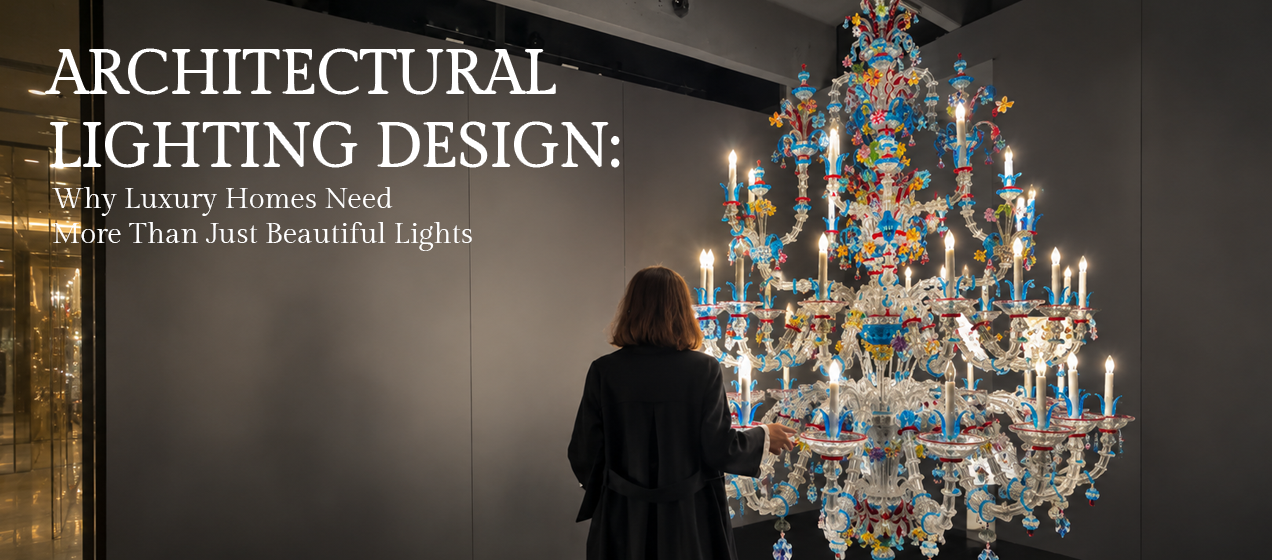
- Decorative chandeliers or pendants
- Table lamps or floor lamps for softer corners
- Wall washers for textured surfaces
- Smart lighting scenes for different moods
The furniture layout should guide the lighting. Lights should not fall directly into people’s eyes while they are seated. TV walls should be lit carefully to avoid glare. Corners should not be left dark unless that is part of the mood.
A well-lit living room feels balanced, comfortable, and visually complete.
Architectural Lighting for Bedrooms
A bedroom needs restraint.
It should not be filled with too many visible fixtures or harsh lights. The lighting should feel calm, warm, and easy to control.
A good bedroom lighting plan includes general lighting, bedside lighting, wardrobe lighting, dressing lighting, and low-level night lighting. The user should be able to control the main lights from the bed. This is a basic comfort detail, but it is often missed.
Headboard lighting, concealed coves, pendant lights beside the bed, warm wall sconces, and soft floor-level lighting can all work well when planned correctly.
In bedrooms, the success of architectural lighting design lies in comfort. The room should look elegant, but it should also support rest.
Architectural Lighting for Kitchens and Dining Areas
Kitchens need practical lighting first.
Countertops, cooking zones, sinks, and storage areas must be properly lit. Poor kitchen lighting can make everyday tasks inconvenient and unsafe.
But modern luxury kitchens are not purely functional anymore. They are often connected to dining areas, family lounges, or open living spaces. This means the lighting needs to look refined as well.
Under-cabinet lighting, island pendants, ceiling lights, and task lights all need coordination.
Dining spaces need a warmer and more focused lighting mood. The light above the dining table should be placed at the right height and with the right intensity. If it is too harsh, it feels uncomfortable. If it is too dim, the table loses presence. If the fixture is the wrong size, the proportion of the room suffers.
Architectural Lighting for Staircases and Passages
Staircases and passages are often treated as secondary areas, but they can add a lot to the overall experience of a home.
A staircase can become a design feature through step lights, wall washers, handrail lighting, pendant drops, or concealed lighting along the side wall.
Passages can be improved with art lighting, niche lighting, soft wall lights, or ceiling details. This prevents them from feeling like empty connecting spaces.
In a luxury home, transition areas matter. They shape how people move from one room to another. Good lighting makes this movement feel more composed and intentional.
Façade and Outdoor Lighting
A home should not lose its character after sunset.
Façade lighting helps highlight the architectural form, materials, entrance, boundary walls, landscape, pathways, and outdoor seating areas.
However, outdoor lighting needs control. Too much light can make the elevation look loud. Too little light can make the home look dull and unsafe.
A good outdoor lighting plan may include the following:
- Entrance lighting
- Driveway lighting
- Garden and landscape lighting
- Boundary wall lighting
- Balcony and terrace lighting
- Pathway lights
- Wall texture lighting
- Security lighting
The aim is not to flood the house with light. The aim is to bring out the architecture in a refined way.
Smart Lighting and Automation
Smart lighting is becoming common in luxury homes, but automation is only useful when the lighting layout itself is well planned.
Scene-based lighting can make daily use easier. A home can have different settings for morning, evening, guests, dining, movie time, night movement, and outdoor use.
But automation cannot fix poor placement. If a light is in the wrong position, dimming it will not solve the problem completely.
This is why smart systems should be integrated with architectural lighting design, not added randomly at the end.
Common Lighting Mistakes in Homes
Many homes face lighting problems because decisions are made without a proper plan.
Some common mistakes include:
- Too many downlights in one ceiling
- Harsh white lighting in warm interiors
- No task lighting in kitchens or dressing areas
- Poor chandelier size or placement
- Ignoring artwork and wall textures
- No dimming control
- Dark corners in large rooms
- Glare on TV screens or polished surfaces
- Weak outdoor lighting
- Switches placed without considering daily movement
These issues are avoidable when lighting is planned early and professionally.
Simran Boparai, Archtelier, and the Role of Lighting in Luxury Homes
For a luxury home, lighting should feel like part of the architecture, not an accessory added later.
Simran Boparai Archtelier works in a design space where proportion, detail, material quality, and overall experience matter. In such homes, lighting has to support every major decision, from spatial planning to final styling.
The right lighting can make a ceiling feel lighter, a wall feel deeper, a room feel warmer, and an entrance feel more impressive. It can also make daily routines easier and more comfortable.
That is the real value of architectural lighting design. It is not about adding more lights. It is about placing the right light, in the right way, for the right reason.
Final Thoughts
Lighting can make or break a luxury home.
It affects how the space looks, how it feels, and how comfortably it functions. It brings attention to materials, improves movement, creates mood, and completes the architectural story of the home.
For homeowners planning a premium residence, lighting should be discussed from the beginning of the project. Waiting until the end usually leads to compromises.
A well-designed home needs more than beautiful furniture and expensive finishes. It needs thoughtful lighting that supports the architecture, interiors, and lifestyle of the people living there.
With a design-focused approach from Simran Boparai Archtelier, architectural lighting design can become one of the strongest elements in creating a home that feels refined, functional, and timeless.
FAQ
1. What is architectural lighting design?
Architectural lighting design is the planned use of light to improve the function, mood, and visual quality of a space. It includes the placement, brightness, color temperature, direction, and control of lights.
2. Why is lighting design important in luxury homes?
Lighting helps highlight materials, improve comfort, create mood, and make the architecture feel complete. Poor lighting can make even premium interiors look flat or uncomfortable.
3. When should lighting design be planned?
Lighting should be planned during the architecture and interior design stage. This allows proper coordination with ceilings, furniture, wall details, electrical points, and automation systems.
4. What are the main types of lighting used in homes?
The main types are ambient lighting, task lighting, and accent lighting. Together, they create brightness, function, depth, and mood.
5. Can lighting make a home look more luxurious?
Yes. Proper lighting can make materials look richer, highlight design features, improve proportions, and create a more refined atmosphere.